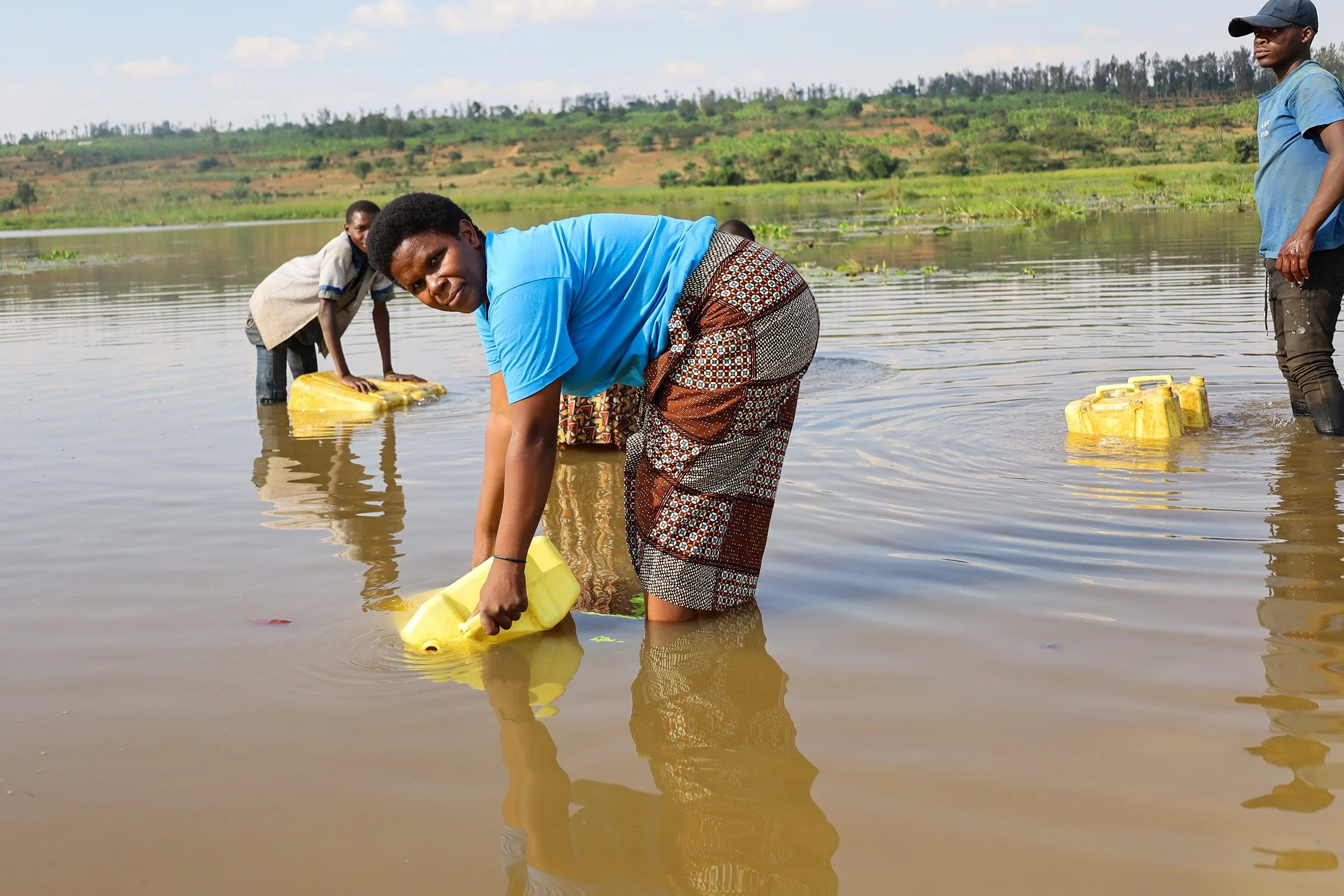
When Rwanda: Accelerating Access project in Bugesera District was launched, the ambition was to bring clean water, decent toilets and good hygiene closer to home and strengthen the local systems that keep services running reliably. This Year 3 update shows that momentum has continued in Mwogo and Juru Sectors, with major delivery milestones now complete and results at scale.
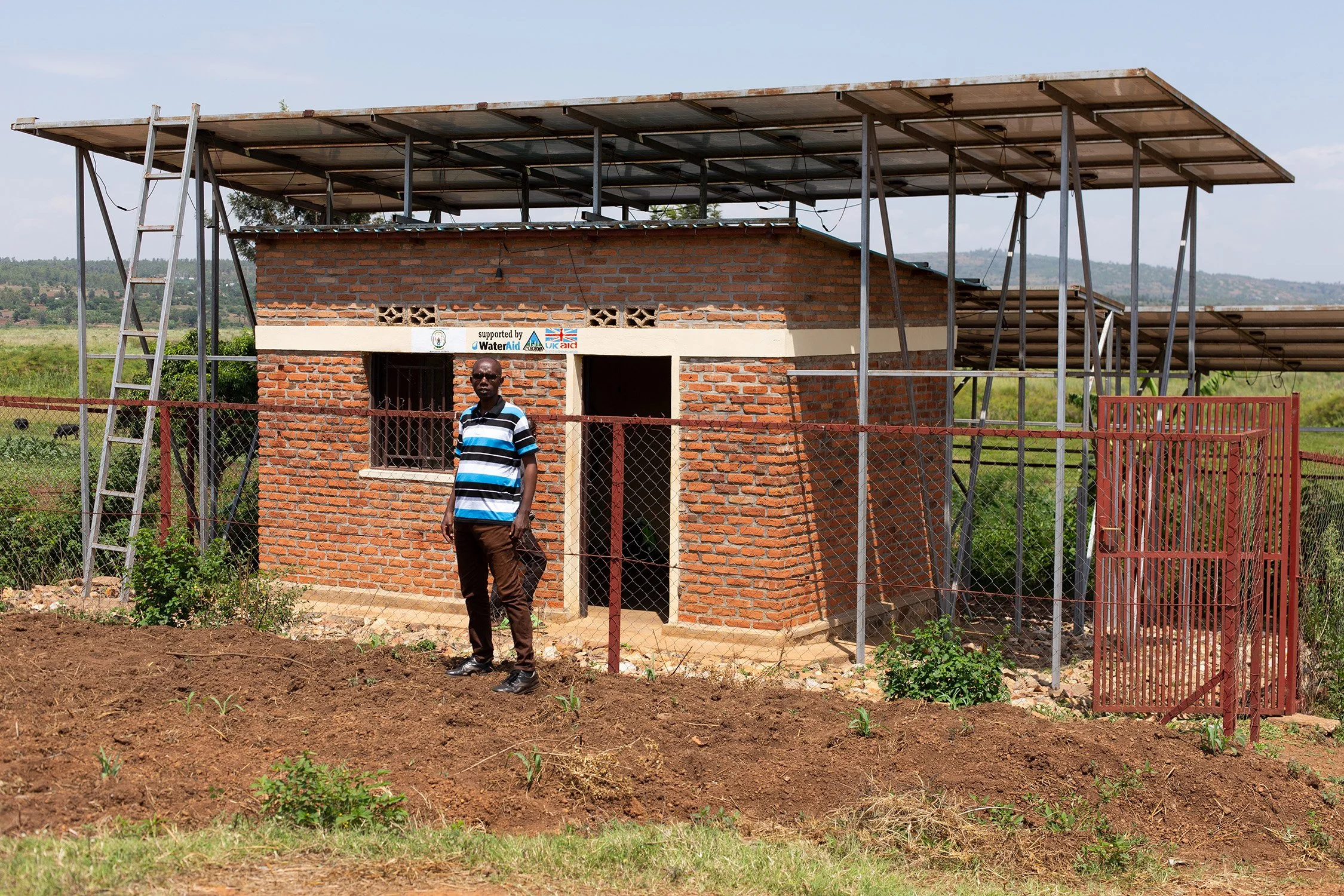
Man standing beside a WaterAid-supported brick water building with a large solar panel roof structure in a rural area.
Year 3 results at a glance
11,850 more people now have access to clean water in Mwogo, following the successful completion of the water supply system extension.
The extension included four new public taps connected to the existing network, bringing safe water closer to targeted communities.
Across Mwogo and Juru, the programme has now reached 46,850 people with clean water, meeting the overall project target (46,845).
Following sanitation promotion, 2,313 households constructed improved toilets during Year 3.
Hygiene outreach reached 94,102 people through community platforms led by Community Health Workers.
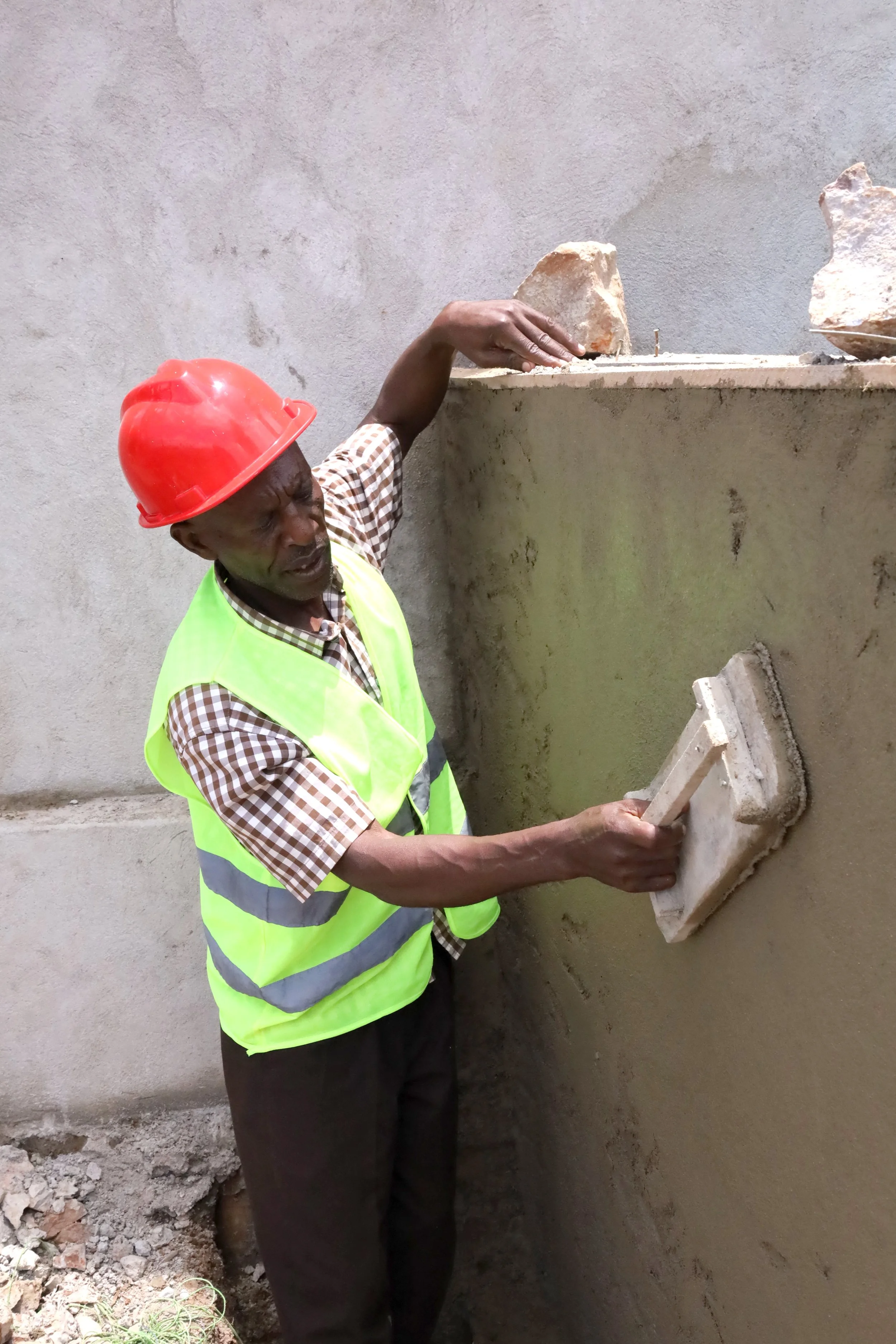
Construction worker wearing a red hard hat and hi-vis vest opening an access hatch on a concrete water tank.
Stronger systems and infrastructure
This phase has also focused on governance, coordination and leadership. In January 2025, partners in the district’s Joint Action Development Forum collectively committed 1.4 billion Rwandan Francs (over £700,000) to WASH initiatives, and 224 women leaders in Juru were supported to strengthen women’s participation in WASH decision-making.
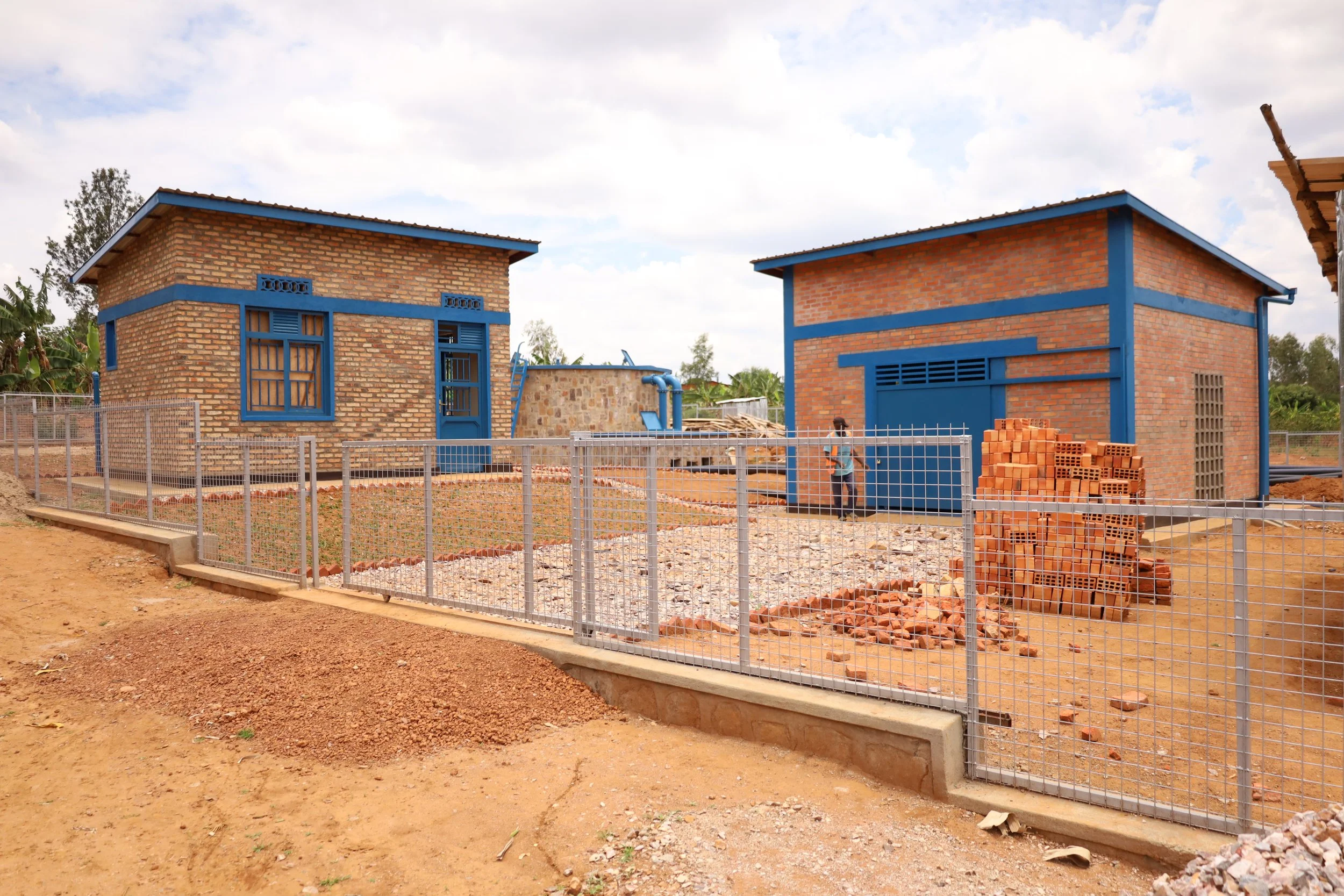
Fenced construction site with completed brick buildings, stacked bricks and pipework, showing a water supply facility installation.
Adapting to reality on the ground
The report highlights affordability as an ongoing barrier to household toilets. In response, the programme constructed 29 model household toilets over three years (including 20 in Year 3) for the most vulnerable families, meeting immediate needs while encouraging wider community action.
During the Marburg outbreak (late September 2024), delivery adapted to safer, lower-contact approaches, without reducing overall reach.
Next steps and a fuller update in January
This is an interim website update based on the Year 3 annual report; a more up-to-date final project report is due in January, bringing together the latest results, learning and overall impact.