Panel Event sponsored by aquaphor professional - March 2026
Project Waterfall’s educational series exploring the invaluable role that water plays in the coffee supply chain.
This event was for coffee professionals and brought together industry leaders for a thoughtful discussion where attendees had an opportunity to learn and engage through a Q&A, coffee cupping and networking session afterwards.
Moderator: Jessica Worden from GAIL’s
Panellists: Freda Yuan from Origin Coffee, Greg Amann from Minor Figures, Tom Greensmith from CRU Kafe, Kasper Hülsen from Slow Forest.
event audio:
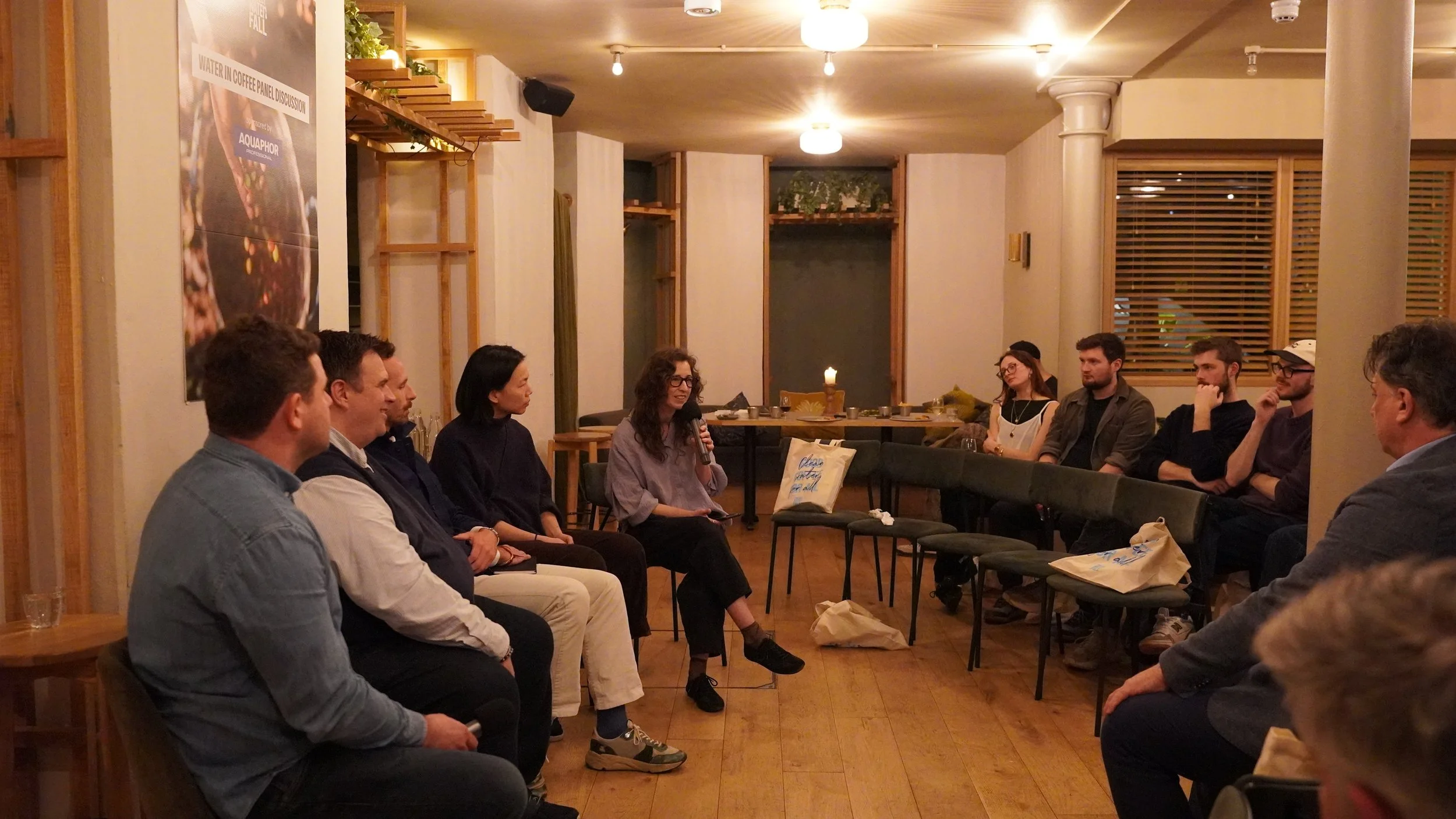
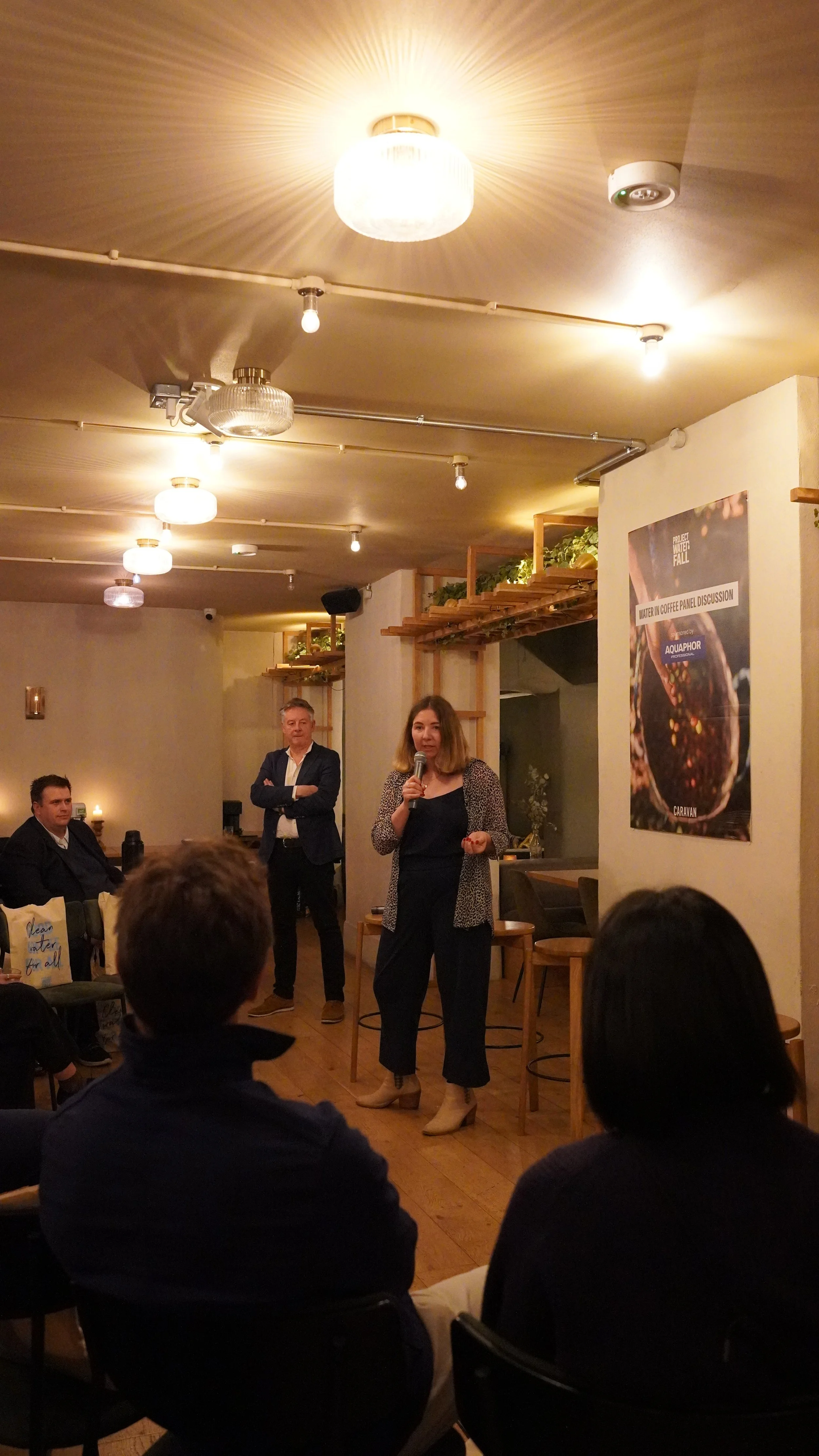
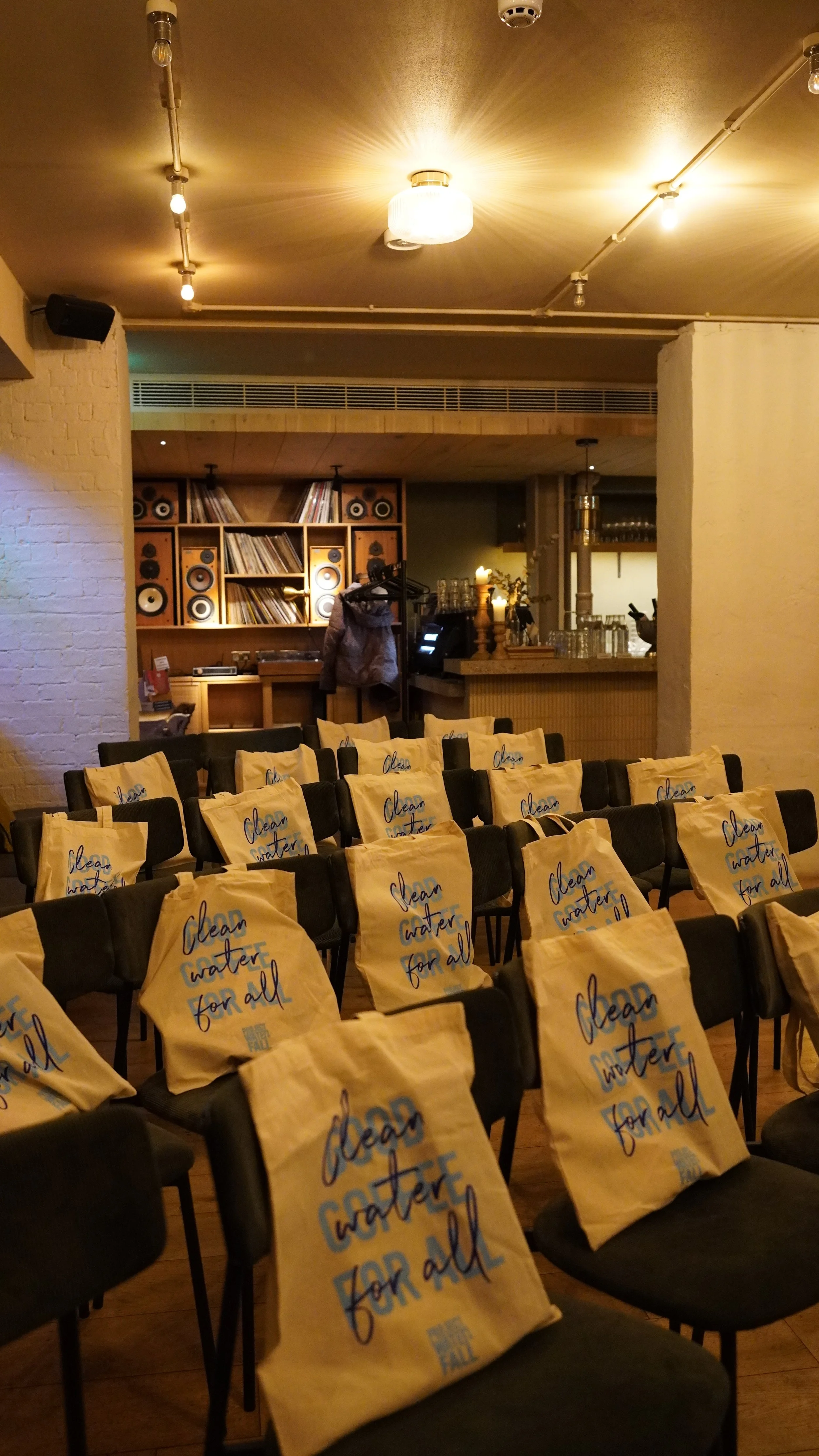
Image 1: Left to right; Tom Greensmith, Kasper Hulsen, Greg Amann, Freda Yuan, Jessica Worden
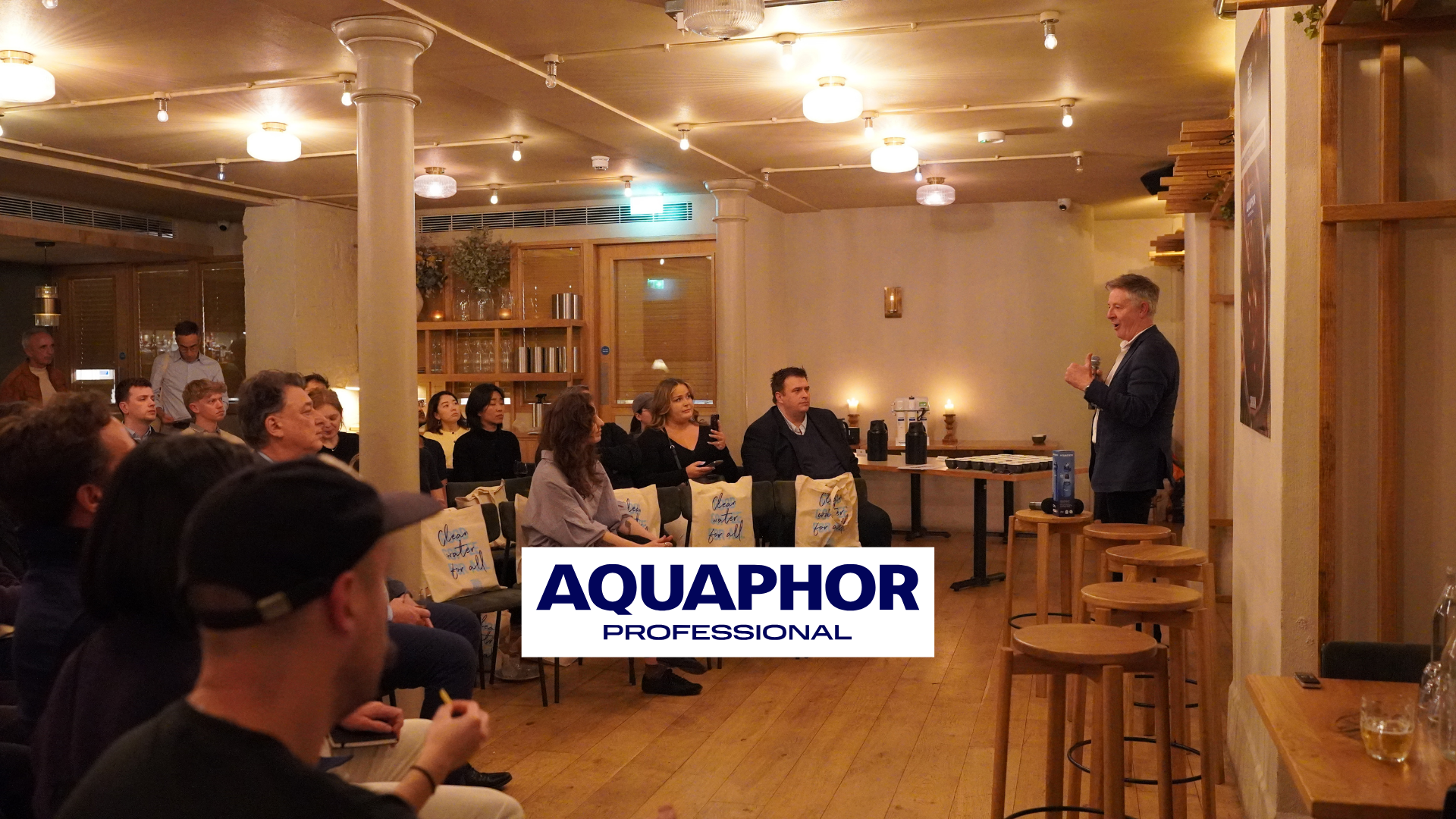
Image 2: Nigel Wheeler (left), Roxy Rocks Engelman (right)
Image 3: Tote bags provided by Project Waterfall
event transcript:
Roxy Rocks-Engelman
Please take your seats. That would be wonderful, because we have a lot of things now. It's okay to sit at the front. This isn't a comedy show, so we're not going to be called upon for any joke even though our trustees are exceptionally funny people.
Thank you to you all for making time on your Thursday evenings to come down and join us for our third Water in Coffee event!
So Project Waterfall, we're 15 years old this year, and we were in Copenhagen two weeks ago, and it's wonderful to see some of our friends, I think we can call you that we made a couple weeks ago.
And I think there's something so special about this industry, of the community that you can form around coffee and the connections it makes the hospitality that caravan and other partners in this room do so well.
Project waterfall, just give you some stats. We raised over 1.7 million to date, so far, a lot of money we have invested 34 water and sanitation and hygiene projects to date, which has helped over 80,000 people have access to safe drinking water, sanitation, hygiene.
Last year, our incredible board; four of them are in the room, so I hope you get a chance to see some there's Jeffrey, of course, there's Jessica at the back, there's Kamal and Matthew, and pleased to make some time to speak with him,
But we might do a sort of iteration, like I think any organization does at some point. And it wasn't quite as an existential conversation as I'm making it sound like we were sort of thinking about what's our impact, and how do we actually get closer to coffee growing communities, and how do we make water matter? Because it matters, right? It's you can't produce coffee without it.
There's a world economic report in 2019 published where it states it takes 140 litres of water to produce one cup of coffee, so at least you agree, there's a lot of water. And yeah, apart from Nigel, who will speak surely and our colleagues in water, it seemed like it wasn't really a dedicated space to talk about this, and some of the conversations we've been privileged to have since last year with leaders in coffee, yeah, you do become quite philosophical. And at some points you do get to the point where people say, Yeah, water is life. Water is interconnected. It affects everything. Hopefully tonight you've got balance of alcohol and food and good times and great experiential parts to come as well. So you won't get too philosophical, but I think the impacts that we are achieving together are incredible.
One other thing I wanted to draw attention to is that last year, as well as funding projects with delivery partners. We also put together our own project, and we're very, very grateful to have partners like Marks and Spencers and Taylors and Trabocca, who have funded with an ambition to highlight what's possible for WASH in a coffee supply chain. And we've been looking, working together at whether you can filter coffee waste water to try and limit the contaminants that go into local waterways, and secondly, can you filter it into safe drinking water? And so the paradigm of water is shifting, and we're trying to make it broader and more inclusive, and it's very exciting. So super grateful for that. Thank you. I'm going to pass over to Nigel. He is going to tell you something more specific, about water, thank you.
Nigel Wheeler
Hello, name is Nigel Wheeler, but I'm here today with a couple of colleagues, Andy and and Jess. We're part of an organization called called Aquaphor, a 35 year old organization based in Estonia. We manufacture water filtration products, selfishly, some other relationships that we might establish here tonight could benefit us commercially. But we're also here because we believe that in the same things that you believe in, the water is scarce, water is a problem and we should be doing something as much as we can about that. So, yeah, we all we make is the water filtration products we make membranes, all types of different membranes that address all manner of different problems. Our DNA starts in tiny filters, in water filter bottles, all the way up to emergency solutions for industry, earthquakes, disaster zones, etc. 2444 containers that give
give solutions to disaster zones.
Relationships with coffee providers, hospitality providers is exactly where we want to be as a business.
There are alternatives to the to the state, the legacy technologies. So you'll find that you'll see Aquaphor professional in emerging different places. We have relationships with Stokes coffee, we have relationships with Zaza bazaar in Bristol, the largest restaurant in the UK. And some of our small bodies are now finding their way into 33 bishops gate as well providing solutions for great coffee and also protecting machines that are installed in that place.
But more importantly, you know, we're interested in this relationship that is now emerging with Project waterfall. I did something a number of years ago, very similar with a brand called one water. The altruists are here, I believe, tonight, and they're engaging in more and more in give back, and that's what we'd like to do as a business.
So we've got a little bit of an event here where we're going to be tasting some coffees with municipal water, with bottled water, with aquaphor water. Hopefully be able to demonstrate a difference, but I'm not entirely sure. I'm pretty sure, but there's people here that can answer questions about the business and how Aquaphor are bringing new technologies into this industry. Yeah, look, the hospitality industry is burdened with cost. You wouldn't believe it walking around in the London but outside of London, cafes and restaurants are closing, and pubs are closing at an enormous rate. Chemicals are being used, individual cafes and restaurants are using something like £100 a week on cleaning chemicals. We've now got chemical, chemical free cleaning, hot water and membrane technologies can take all of that cost. Our Guinness and Diageo decided to put some of these technologies in their storehouse in Dublin. So the kind of Guinness that you will drink next time round, those glasses will be clean with that before technologies. So anyway, coffee is where is what we're talking about tonight. I'm not sure whether you've got anything to add at the moment. But Andy all that. Andy's the water boy YouTube channel if you want to know more about water.
Yeah, hopefully all of you will go away. You'll start using one of these.
And yeah, and you'll remember Aquaphor. Am I handing over to Jamie?
Jamie Strachan
Yeah, why not? My name is Jamie.
I’m head of coffee at Caravan so I look after all of the coffee here at Caravan and what we serve
So today we grabbed our decaf coffee, which is from Papa New Guinea. The area is quite special to my heart, I think is really underrepresented in the European, UK market. So I'm quite excited you guys taste a decaf from that papa New Guinea, and we've got, like I said, three different carafes brewed the same way, but with different waters. And try a little bit of each cup, each carafe.
Jessica Worden
So I'm going to just sit here and imagine that you're all really, really excited, and I am super excited. We, hosted this event last year, and we had an incredible group of people as panellists. And this year, I think we've kind of, we've done an incredible job as well, because we have such a diverse group of panellists who touch such a broad expanse of the industry. And so one of one of the things that we've always tried to focus on is, especially as Roxy has taken the helm of project waterfall, is really helping people to understand how much water matters, but also how it's embedded throughout every touch point. Does your does your coffee taste good? It tastes good because it had enough water when it was growing, right? It tastes good because the water filtration system that is behind the equipment was on point that day, right? Or that month, or that year, and then your coffee it also taste good, because the time to really support, you know, there's so many elements that we don't even think about like also, I don't know how many of you in the audience have ever worked as baristas, but you wash your hands so often. It's just, it's part of everything that we do.
So really like to thank our panellists. So what I'd like to do is first introduce yourself. So my name is Jessica. I work for Gails bakery. Water is important to both coffee or drinks, but also bread. It's one of three ingredients, same as coffee (Coffee is two ingredients). And what I'd like to do is I'll introduce everyone very briefly, and then just hand the mic over so that they have an opportunity to say a little bit about themselves, what they do, and then we'll turn it over to the content of the panel.
So this is Freda.
Freda Yuan
Hi. I'm Frida from origin coffee roasters. I'm the director of coffee at origin.
What I do daily, buying coffee, working on sourcing policies for the company, brewing coffee concentrate at the moment. A lot of new products going on at the moment.
Greg Amann
Hi everyone. I'm Greg. I work at Minor figures, my problem while I sit between the PD and sales teams, which I guess really means we work on our future liquids, our future powders, and then. Make sure that they transition into the business, into the commercial functions, and into the geographies that we want to see them into. So yeah, I've been there three years, and yeah, past and present, the projects that the guys have been working on, and we're now working on a really exciting and, you know, water, you know, especially in the plant based space, you know, our products are 82 84% plus water. So it matters, but then also, at the agronomy level, it also matters, because we're like, you know, coffee rose this year, we're dealing with a crop. So yeah, thank you for having us.
Kasper Hulsen
Kasper, yeah. Hi. My name is Kasper. I was just told I couldn't hide my non British accent.
I am from Copenhagen a company called slow forest coffee. We were founded in 2018 with the purpose of showing that you can do sustainable coffee at scale. Yeah, basically doing two fundamental things different than the entire industry, which is fully agroforestry grown coffee and then we have a fully integrated supply chain so from land restoration and forest growing to distribution to clients. There's no middleman and no sourcing, no nothing. We run the entire stock ourselves. Like I said, starting 2018 we have 500 people 20 of us in Europe and the rest of the Global South, where the change needs to happen, also in water.
Tom Greensmith
I'm Tom greensmith. I run a small to medium sized business called CRU Cafe. We source fair trade, organic coffee. We mainly sell in coffee capsules. I've been doing for 10 years, and my day to day is everything from, I'm head of coffee. I'm also looking at cash flow. I sell to people soon and, yeah, I'm very passionate about coffee. And yeah, thank you very much.
Jessica Worden
So Tom he's been very, very humble here. He's been a key partner for us for a long time, and was actually one of the first people I met who what, I think we met eight years and years ago, and we were talking about moving over to organic coffee. There weren't actually a lot of people talking about it at the time and in terms of, like, the home consumption market. There were, there were virtually no organic, you know, options at all. So I'd love to hear just, you know, what, what? What drove you to build an organic coffee firm.
Tom Greensmith
So, full disclosure, so I actually wasn't the original, original founder. everyone thinks I was a founder crew, but obviously I wasn't the founder, but I had a very brief career in law, and I hated it, and I thought, want to do something different. And it was the time when, everyone's disrupting markets, and this large sort of multinational, Nespresso, lost their patent in 2012 2013.
Apparently, someone within their team filed something wrong. So that's why they lost it. So, you know, she and there was an opportunity, and I saw this company had literally just started, and I said, I think I can help you sort of consumer goods. And I love coffee. I think it really interesting. More cru was all about, was sort of ethical organic coffee as our sort of trade mark. It was all about quality. So when nespresso lost their patent, lots of people came into the market that were doing much cheaper coffees, so it wasn't about quality, it's all in plastic, and it was about undercutting. That's everyone trying to do. So we thought we would have, as one of the fans, described, the Chanel of coffee, which was and organic was what we chose, and fair trade, so we've always bought double certified coffee, and has been a journey.
But as always, we've always stuck to our guns on coffee. But as I say, I think organic is is important. I think if you look at whether the markets developed over the last 12 years, as I've been doing it, there's not nearly as much penetration for organic products as there is in the likes of Germany or the US especially because USDA is a really recognized laborers in the UK, we are so associated with organic coffee. But it's not surprised that we've done really well in Waitrose, Ocado. We had a Tesco listing for a while, and they didn't go well, you know, we went in and out, and that was a big learning for us. But I think, you know, we've, we've stuck to that. And I think in terms of, you know, I love sales, marketing, brand, but it's a white space we saw, you know, and no one's come, no one's done organic. Really, there are big brands, which, very pink, which were organic, and then organic anymore. And these are, it's a, you know, people, we've stuck to that, and we've said we're gonna do it.
We were having a big conversation recently. We've got some investment, and they said well Tom what would the cost of goods be like not buying organic out of interest, and it's a big difference, but it's something we will stick to. Will always sit in the sort of top end market, but people come back because we're buying good coffee and it tastes good, and we've got a good story.
We're doing things with the likes project waterfall and raising money for projects, and I think that human side of it as well. We're a small business. We can do that. I think that matters with the consumer. These days, they want to know that it's not just a multinational.
Jeffrey Young
A quick just thank you Tom you're committed to project waterfall. I just you know, we all know how difficult this is and everything, but you stuck with it. Thank you very much.
Jessica Worden
So what I my career actually didn't start coffee. I started in an organic bakery, yeah, and I think organic is for a lot of people, their first exposure to something meaningful about how they consume. And one of the things I found really exciting when I was connecting with minor figures a few years ago was how you started looking at oat milk beyond just providing something that tastes good with coffee. And you were looking at the home consumer and trying to understand, okay, how can I bring them on this journey to do better and do more with their everyday consumption?
Greg Amann
Yeah, I mean, I mean, the whistle top tour in history, minor figures, you know, just started, started with coffee and cold brew. But milk only existed to make the latte product, right? And then, you know, the team, you know, previously, they kind of mess around for four years making these incredible drinks, which then went into the nitros. But then it was really 2018 when the original owner was kind of separated out and launched in the Tetra Pak. But then the plan was always to launch the organic but because nobody had done it, it was incredibly difficult, and it took a very long time, and nobody had taken organic oats, and nobody had made a base from it, let alone use all the other organic versions of the same ingredients to make this product. So for us, or for minor figures, you know, even since the beginning, you know, the business has spent, you know, a lot of time, money and investment in, you know, sustainable projects.
I mean the three things that kind of care and cares about, you know, coffee taste and the community around it, and sustainability and what we're kind of doing in so far as what, what we're gonna leave behind in the planet, I think. so the organic product was, was naturally, you know, what we had access to, as you know, best invest in practice kind of thing within our category.
Then I've been in the company now for three years, and the two projects I've been really fortunate to be involved with, which have been, like, pretty exciting for me. Like, one is an oat milk powder, it’s a concentrate, that's addressing, you know, sustainability and environmental impact from, I guess, a manufacturing and a logistics perspective. Because, I mean, if you take out the water, you know, on the size of a pallet, which usually has got, you know, 1000 litres of Tetra Pako, you're getting 6000 liters plus. So extrapolate that out to containers, to trucks, to all of this kind of stuff, and the eradication of that space that's on there, you know, you've got some real world impacts that are kind of happening.
So the other and, you know, the water aspect of that is one part of it. But then, you know, what you then put into it, in terms of water quality, you know, these guys will, you know, have a good opinion on as well as, you know, you've got to have good water going in, because good inputs equals good outputs.
And, yeah, the other, the other project, which, again, you know, is more a more recent one, is there's a collaboration we've done, the wild farm so they, you know, without going into the agronomy kind of upsides of, like, how they farm, like, one of the biggest kind of parts to their MO is that they, so long as the farmers are kind of adhering to, like, their strict kind of code of practices, they the water companies, you know, they're working with six of the major companies here in the UK, and they're quite actively paying each wild Farmer, you know, per hectare money because their way of farming, their way of producing their crops, you know, it's like, quite fundamentally, it's eliminating over, like, nitrate runoff. So it's reducing cost as having, like, a huge benefit for the environment. And, you know, again, everybody's kind of touched on here that, you know, water weighs both at origin, but in this country, you know, our I think green peace kind of said something recently, you know, kind of getting bankrupt. I think so if we as consumers all have an ability to engage with crops or consumer products that have a positive impact, you know, it's, it's kind of why we kind of exist, really and what we can be seen to be doing.
Jessica Worden
Yeah, the thing is, is, once you peel back like the focus of the industry on doing better and trying to find ways within your own network or within your own niche, there is so much we can achieve. And thinking about how minor figures is. Like, completely scoped out. Like, okay, how can you approach this from so many different angles? It makes me think of some of the early conversations I had with Freda about how you take a specialty coffee business that is known for its quality, is known for commitment to sustainability. That often isn't looking for organic, and I think also within the specialty market, sometimes it can be a bit challenging to find something that both meets what you want as well as organic, because of the price premiums that are associated with organic. And so all of the time farmers were opt for one over the other.
Tom Greensmith
There's a lot of farms that are organic, which aren’t certified
Jessica Worden
And I think the specialty is, I think it's quite interesting in the sense that it can advocate for the price associated with good quality coffee that's sustainably grown. You know, looking at every different pillar that other than sustainability, so not just environmental sustainability, but also economic and social. So I'd love to hear like a little bit more about how you approached it, knowing that, you know, because you're already hitting those pillars of like in the UK, doing a great job and having tasty coffee. But how do you how do you create a framework around that in the world where maybe that doesn't exist?
Freda Yuan
This is a very hard question, because you're giving me the different question that you wrote to me on the email.
We didn't want to do organic. So origin, we source on 20 countries, and we're roaster based in Cornwall. We didn't want to do organic because organic require producers to actually stop producing for three years, to transfer their soil to become organic practices, and then so that they can get certified, etc.
And that means three years of their product cannot be sold to the market. And as well as there will be a lot of money input for producers to start in the beginning. Which one of our sort of like buying model, what one of our buying strategy is buying from smallholders, which sometimes those budgets is very hard for them to achieve. So that's what my beginning was, set up, not to buy from organic so then I was traveling to Colombia, and I was very inspired by a producer who started to introduce me to regenerative agriculture.
And I do this because it is actually a term that the industry started to use, and marketing tools that people are using. And I have been thinking about this term a lot, but I'm struggling to find a new term, and so I'm using this, yes, and working called Climate responsible, but I don't regenerative time. You know the industry is using that?
Yeah, but the reason of I lost the train of thought, but basically I learned that, and I'm extremely passionate about it, because I realized coffee tree is like human. So I just had a two and a half years old, and I realized coffee tree through my journey of learning regenerative practices, coffee trees is like a human, a baby. How you feed them, how you give them nutrients. You don't feed them McDonald's every single day. You give them something that is really healthy. You don't give them medicine just because, so medicine, you think of chemicals or fertilizers or pest controls or food in terms of like bio, organic matters, etc. So that you look into their entire holistic health systems. And imagine the immune system like our gut is like the soil health for the coffee farm. And then imagine so my son is two and a half, and we wanted to take him to a French school, because my partner is French, and is that the environment you want to give them to learn and grow? Whether it's a very friendly, a nice, less stressful environment for them to grow, and it's exactly the same as coffee farm, whether it is biodiversity, whether they are different trees or fruits that then the flowers that we provide natural enemies to against each other, but not attacking the coffee cherries. So it's the environment that you're providing.
So that's when I got really excited how actually growing a human is like growing a coffee tree. And for me, like regen is such a topic that is so broad, and I started to do more of a definition for our own our own sourcing, because there is no one way fit all. There are so many different countries fitting in so many different contexts, and it is really hard to come in as an Asian person saying, Hey, you have to do this, because this is what I require. Otherwise I would not buy a coffee. So then we are trying to work together with our suppliers, particularly in Brazil, which is a very interesting location, but they have been producing mass coffee, and then the farm is huge, but then you can't build, you can't plant coffee trees because of the way they grow. And as well as use the mechanics to select coffee. So it has been quite challenging, instead of understanding how a scope that it can be for sourcing our own coffee. But we actually realize this regenerative, We have producers working for 15 years. They are actually regen. But just because there's no such a fancy term happening 15 years ago, no one really paid that much attention to it. So yeah, that's sort of my approach.
Jessica Worden
I think really sharing more stories about how we introduce variety and complexity into how we source, who we partner with is really critical to changing the dial. At Gails we've been on a real journey to embrace a soil positive approach, and that's for us that's been a blend of regenerative grain from wild farm, but it's also shifting over a portion of most of our state over to organic there's no, I don't think there's any right answer, because everything has a specific context. Yeah, exactly. And this is why it's really exciting to have Kasper with us. So I would love to hear a bit more about the approach to agroforestry, because that's so key to water retention on the soil.
Kasper Hulsen
Yeah, yeah, exactly. And I think first of all, I need to talk to on the regen. We should stop using that because there's more money going into lobbying in Europe on coining regen for big coffee so they stay in Starbucks. Then there is supporting smallholder farmers in the world so and the definition of regen is being coined by people who doesn't believe in for example, again. I don't believe that organic is the gold standard, the best gold standard we have now for coffee. But of course, there's so much more to be done.
And basically what we do we work with two models. We started out in Laos. Now we work with two models. We work both with smaller farmers and we work with our own managed farms, and it's two completely different approaches. The smaller farmers is, of course, collaboration. Like I said, we are people on the ground every day into the communities, understanding what their challenges are. Fixing coffee from a sustainable perspective starts one place, and that's what's social if you can't convince farmers to change, there's no point in coming with your ideas about organic or meat and anything. So it starts by introducing programmes that, over a long term period, will accelerate their livelihoods to a much better place than where they are now. And that's why we start with smallholders. And then from there, we start talking about, okay, how do we help you with seedlings? How do we start building out your farm from being a monoculture to becoming an agroforestry system? We train and teach them into how to work with productivity and quality in a new way of growing coffee. They have four or five generations of coffee farmers, it's a journey for them as well, but it starts with us providing them a path to better livelihoods.
So that's that's the one part. The other one is where this is really on display. What we do is we take over any monocultures. So, you know, there's a lot of deforestation in coffee, and usually in the areas we operate, or everywhere, somebody's cut down 500 hectares of forest, and then they grow coffee for 20 years directly in the sun, no shade, starts drying out the soil. The soil doesn't all the water run off is there because the soil is super hard, and all of a sudden, deal starts going down. And what do you do? Instead of actually fixing your 500 hectares, you find 500 new hectares, and you cut them down, and then you start from there, and you just leave your old money machine behind.
We take all of these farms, and then we start from scratch by rebuilding natural ecosystems. So it's we're not rebuilding the Amazon, we're rebuilding the combination of forests and agriculture, agroforestry. It's done quite meticulously by Forest manuals with forest think tanks. So how many tree species? At least 20 non-invasive tree species, different tree species that have different root systems, because that also helps water capacity of the soil, the water holding capacity in the soil, at least for canning players, so from coffee and above to five to eight metres, 12 to 15, up to 25 because that's how you need to build a forest in order to bring back wildlife, for example. Then you also plant a lot of fruit trees. Why? it's a cheat code for many things. First of all, on shelf food scale, you get extra crops for the farmers, but with fruit comes insects and pollinators. So all of a sudden, Mother Nature knows the stuff. So something as simple as planting fruit trees elevates the return of bird life, and all of a sudden we start seeing mammels in the farms. So of course, this is not done overnight, but when you take over a farm, we start the process. And in time, these farms then start yielding. We measure everything. So we have more than 100 data points each farm, some is done really high tech, so satellite monitoring and yeah, and some is super low tech, getting out of it and interviewing people, putting it in a piece of paper, and then inputting into a system, and you get home. But all of these data points is what we use to understand the systemic connection between all elements of what's needed to have a future of coffee. So that is carbon sequestration in the trees and in the soil. It's, of course, nature, every element of nature, it's water. You measure a lot of water. And then, of course, the social part, and now we're just only talking water in how we grow it, then we can go to processing and how we then, for example, we have our own wet mills. Like I said, we are fully integrated value chain. So we have our own wet mills. And that's, of course, us coming in, installing. The best wet mills. So not the old wet mills that been standing there for 20 years that takes tonnes of water usage to wash the coffee, but the state of the art equipment to actually work more sustainable, even though there's water usage in that domain.
So a lot of stuff going on. And, like I said, you have data and everything. I think the one that resonates most in the market is probably that we are SBI company, so science based target initiative. I do think that being on the only coffee company with a documented net negative coffee across 123, and flat, which means that for every kilo of coffee we sell, we capture between 20 and 30 kilos of CO2, fully documented everything to it also that I flew to London today. So yeah, and we can only do that because we have the entire value chain in terms of full traceability, full transparency, primary data and everything and all of that primary data, for example, in water, is super interesting to then put on display as much as We can work together with academia and other partners.
Jessica Worden
Thank you. That was pretty impressive. One of the things that I have to reflect on, though, from what you were saying, was the social infrastructure, and I would be remiss if I didn't bring it to the backbone of we are all here tonight. So I was hoping that Tom could share a bit more about your involvement in the Tibeb project.
Tom Greensmith
Yeah, so Roxy’s predecessor, Rebecca, we were chatting. So we've raised money for Project waterfall for a number of years now, doing various things. And then we were talking about how we can sort of take the story. So we've done a number of small projects, both in with project waterfall, and we've done stuff with the Galapagos trust. We've done stuff with Burundi National Park to raise money for the team there who look after the mountain gorillas. And it's about connecting the consumer with these stories about these amazing places where coffee's grown, because coffee is growing in the most amazing places around the world, and lots of people drink it.
But my sort of theory is that people don't really know it comes from I think making that connection, for me is super important as a brand. That's our job. And so when the Tibeb project came up and Rebecca said do you think you can raise £30,000 for a school in Ethiopia, and we talked through what it would deliver for the students at the school and everything.
And I sort of went to a board meeting. I said, guys, we're doing this. And they said, Okay, fine. And we got on with raising money. So we had our we had a yoga chef Ethiopian coffee capsule, which we sold in that domain. And we did a charity quiz, which was rather fun. And what wasn't fun was the me and a colleague ran 75 miles long Thames to raise money for the charity as well, which raised lots of money, but was miserable. But, yeah, it was great. I think the just taking, for me, it's about the connection between the consumer and the people. And it's not that the children at the school are growing coffee, but it's the people in those communities. And I think, you know, as brands, which, you know, I'm not, unfortunately, not big enough to be really making an impact on the brand like Kaspers businesses, but I think if you can tell that story and help do your thing, then you know, brands should be doing that. And part of the bigger thing that's going on, but it's been a great pleasure to be part of it.
Jessica Worden
Yeah, thank you. I think the consumer strategy is really key, and I'd love to hear from any of the panellists, any thoughts they might have on how they approach that challenge.
Kasper Hulsen
yeah, I think there's multiple aspects of this. First of all, we all talk about the consumers, the conscious consumer, and we all want to buy organic when we go into the supermarket, but we forgot when we got to go out. Uh, so what we are saying and what we're doing doesn't align. That means that, of course, there is a massive shift towards sustainable solutions, organic solutions, and I think that's obvious to all, even though we have an orange man somewhere in the world saying that there's nothing wrong. But I do think that the one thing is what the consumer wants.
Another discussion which is equally important is, do we give them the sustainable product? Is it actually sustainable? I'm hiding, as I met someone from M&S, what is retail growth in this? I mean, the consumers can't find more sustainable products that was on the shelves. So where's retails responsibility in leaning backwards into the value chain and asking the right questions beyond just what goes so I mean, as coffee industry, you know, seeing, we need to be leaned back into the value chain. We need to understand what goes on. We need to, like, integrate further backwards. Go visit however we do. What about the next? What about the ones that fronting the suppliers or the consumers? So I think there's this multifaceted discussion where everybody needs to take responsibility. And I think it's it's a bit lazy to expect that this is only on the consumer and demand is gonna drive this only. It's also about every other, every part of the value chain, taking true responsibility in order to make that conscious choice available. You
Freda Yuan
for me, I think how for me, how we operate, is not looking into consumers, but it's within our backup of what is the best practice. And so, for example, we had this fellowship project that we worked together with Belco in France, and they Well, this sailship company Talt built a huge sail ship, and they can hold 50 containers of coffee. And it's been coming back and forth between France and as well as to Brazil and Colombia. And what's great for us is, basically, I'm as well as purchasing regen coffee. And then it's actually carbon negative. So what you can see already, and then it's like, obviously, sail ship coffee through the wind, etc, less fuel, less carbon footprint, and less noise in the ocean. The coffee is stored underneath the water, because it's not like stacking up above the boat, but it's actually underneath it, and then the water is above the storage that coffee, actually the temperature will consistently maintain around 17 degrees or 18 degrees. That will keep the quality of it and for us, we have been trying. If anyone is saying, buying a coffee, buying industry, we need your help, because we're trying to get this sail ship land to the UK. So I'm looking at you again. We need more help to be able to achieve that. Because right now, the solution is going to France and then take a b1 100 fuel truck, which is the most sustainable way we can do, to send the whole containers of coffee directly to Cornwall, which is where we based. Whereas before, when the sail ship should come into France and then we might just call one palette, two palettes, and then the pallets of coffee to send to their distribution in Nottingham, and then send to Cornwall. And we realise this is actually not helping. So throughout a lot of learning, we realise what is the best and optimised way to achieve the goal, but obviously the first year, the second year, it cant be perfect, and we're always trying to find solution. And I think that is like, it shouldn't be a consumer facing things. It should always be. This is what we believe, and this is what we have to do
Greg Amann
as well, just taking, I guess, from a perspective, from MF, like the brand has always existed, to kind of bring people into a CMO sphere. And we very much believe that if you're able to resonate with you know your audience, and kind of get them into taste your products, like your product, you then have the, let's call it, then the right and educate them about what you're doing. Because, I mean, you know, like, even the split second about talking about regenerative, you know that there's whatever farmers doing regenerative ways. You know, another farmer, both in coffee, both in, you know, wheat, traditional farming, you know, could be completely different. So you really the way we take the approaches, you know, like really kind of from a B2B perspective, building those communities at a grassroots level. And then, you know, we then have a social media following. You have a long email list. You then have a B2B content list, which, you know, yeah, we can then start talking about, you know, what these, these sorts of designers, I think, to your point, while your project we're talking about here is, you know, just hearing what you said there, you know, there's a lot of amazing things to articulate back to the consumer, which, you know, everybody's got a choice as to what amazing coffee they could be buying and tasting. But fundamentally, if the consumer articulately knows which one is, you know, better for the environment, that's kind of where, you know, I guess brands have an ability to, kind of like, you know, sway them, so to speak, and again. But it's incredibly difficult, though, because, you know, there's about 30 plus things I've been talking about by the region as well, can't do, but like, how do you articulate that on a shelf space in a supermarket where, you know, there's very limited, you know, merchandise field doing that, and then there's cost associated with it, something. So it's a couple of questions here. I haven't really come with answers, but it's very difficult, a very kind of interesting perspective. And I think that, when the q&a opens up, it would be interesting to hear what everybody here thinks, and like, how they can absorb this information. And what is the point? I mean, for us, you know, we're making these products that's kind of golden, so, yeah,
Jessica Worden
ultimately, we can't make better choices if the choices aren't there, and I think there's so there's so much we can do in terms of skill sharing, information sharing, as an industry. So I'd love to take some questions from the floor.
Q1
thank you guys. So much. Really interesting. I just have one question that would probably span across all of you guys. But how are you kind of, actually, I'm gonna get out because I wrote it down, how do you balance the urgency to address these things, such as, kind of like regenerative agriculture, which take time to kind of place, with the kind of pressing need to do it now, the urgency versus the long term kind of impact of it, if that kind of does that translate.
Jessica Worden
So how do you balance competing priorities? Yeah, I guess wanting to do something that takes a
Q1
doing something that is urgently needed to do now, such as enforced kind of work and encourage regenerative practices, with the fact that it takes a long time,
Greg Amann
I guess, two cents on the couple of projects I've worked on, and it's part of the beauty of working for a company like Minor Figures you know, in project management, you'll have, you know, kind of like the gateway of working, you know, you've got gate zero through to five, something you know, where it's very stringent in text, like for us, fortunately, you know, our co founders, if they want to do something, they will skip through half of those topics because it's either the right thing to do or they think they've got a competitive advantage. And, you know, on the whole, most of the time it works out. And it works out like, fundamentally, the organic, you know, development, you know, yeah, it took a bit longer, you know, back in the day, but at the same time that for, you know, a Diageo or something or other, you know, with the prototype table type thing. So being part of a company that is big enough to, you know, have some profits feel to then reinvest into NPD, but then small enough to, you know, not have, you know, other people to ultimately answer to in that kind of way, is how it ultimately gets balanced, and it's part of unique part of the company.
Freda Yuan
From me, from my side, sustainability, is always urgent, so it is always there, and you always have the urge of, why no one removes the plastic of cucumber, like plastic and cucumber. And for me it has to be a principle of, for example, sourcing. Obviously, it took me ages, and I'm still working on region definition. I finally make it work. But then the second bit is, how do you make it apply to the coffee you buy? And that is another big challenge, because we buy quite a lot of coffee. There's a lot of long term partners that you work together for so many years, but suddenly you come to them say, hey, like, I'm gonna buy, buy from this type of approach forward, but you can't just say bye to them straight away, but it's more like ongoing conversation, but knowing that this is your priority, this is within your principle, and you cannot let that, that principle go. And I think that's more of my way of moving forward.
Greg Amann
It, it's either in your DNA or it's not like how to
Q1
kind of balance, yeah, those two things,
Jessica Worden
is it balance, or is it necessary friction? Yeah, I think, yeah.
Q1
Yeah, I think, yeah. I guess, kind of both. I guess, in terms of the things that need to happen, especially in terms of what you're saying actually, about the process that it takes the time it takes for something to be considered organic again. And how do you kind of battle between this needs to kind of happen now for multiple reasons, in terms of like sustainability, and kind of like how you communicate those efforts with your consumer. And organic is a great way to do that, because it's actually communicates quite easily what the consumer wants to hear. And then how do you balance with the fact that it takes a lot of time and kind of resources and money to kind of, yeah, get, get through that barrier, I guess.
Kasper Hulsen
I think it's a much bigger question than coffee. No, I mean, it's, it's us as humanity, understanding how we're mistreating the planet. I mean, we're sitting in the coffee industry. The reason we are not in South America is that our lens of doing business is 30 years. If you do a if you do a 30 if you want to do a 30 year investment in Brazil, we cannot finance it the amount of drought you're going to see in Brazil because we're cutting down the forest. The rainforest is going to be so massive in 30 years that that investments that that people will do today are going to be gone. And just put out a paper that said the price of insuring farms in Brazil is going to skyrocket. And hey, when we still run to Tescos and get the cheapest coffee we can get. And this is just coffee. I mean, we don't, we don't listen to climate scientists. Have you ever seen the video of Johann Larkspan, he's one of the leading climate scientists in the world. He did a TED Talk about a year ago talking about tipping points. There are nine planetary boundaries that framework they set up 15 years ago. And once we go beyond tipping points, nobody knows what's going to go on. Science can't explain it. We crossed seven of those tipping points out of nine, and what is we're still just doing business as usual.
So I sound like one of the old grumpy men on the balcony in market show, but it's not because I'm grumpy, it's because we don't get the magnitude of the problems that we imposing on the planet, and nobody can see what's going on. If the Gulf Stream turns, there's going to be no wine growing in Europe, and that can turn between this year and 2095.
Hey, you can run to Copenhagen because there's going to be ice across the UK and Denmark, but it could happen next year, then we are done having agricultural systems in Europe. So that's why I'm saying. It's a bigger question. It's another lens. It's another lens that we need to have in finance. Unfortunately, the financial sector is the one that has the most speed, or the most speed, on transforming how they lend money and invest money. So that's a good thing, because money talks in our economy. But, yeah, it's a completely different lens of what we do in coffee. It's not about what we're going to pay for beans next year. It is, can we get beans next year? Do I actually have a coffee business in three years? So it's a completely different lens, and it's a different mindset that we need to start building our businesses with. And it's so many things. It's taking responsibility in the value chain. It's something as simple as acknowledging that we are no that what we're doing in the Global North is hideous. I mean in coffee, 80% of profits in coffee is made and retained in the in the consuming region, , if you want sustainable coffee, 95% of investments needs to be in the growing regions, but hey, and maybe he can have this variety number 16 in his basement while people still live in poverty. So we need to recalibrate completely how we think about business, how we think about wealth distribution on the planet, in order to make this happen, and it's not going to be tomorrow.
Tom Greensmith
I think also what's interesting for me working in small business, and I've come across lots of people who start businesses in whatever you do, I think lots of people coming to say, I want to start a coffee business, and then they learn about sustainability, and they're like, Oh, this is actually a thing I should be talking about. I think that needs to be flipped to its head. And it's with any business you're going to especially in food, beverage and supply chain. It's coming at it from a different lens. And I've only met Kasper today, but your founders come from a sustainability background, and I think that is super interesting, because you see how much scale they've had in five years, six, seven years, maybe. And I think that is because of their background, and it's not because they come from a coffee background and said, I want to make money. I want to have a really cool brand and grow a beard. They may have beards, but it's, I think they've come on it from a different lens. And I think that's one thing about success, and that's actually really interesting when we're talking about this whole thing.
Jessica Worden
Yeah. But I think what I would love for everyone to have as a key takeaway is that lens that can be applied at any time by any person for anything like you aren't you aren't limited by being a business owner or having access to incredible sustainability experts to make change like sustainability is something we can all do.
Q2
Hi, everyone. So I actually came from the cosmetics industry work which is facing similar problems, if you're not aware, the shampoo, the conditioner that you use, 80 or 90% of that is water you can shipped around the world. And so one of the contributions was to get into solid cosmetics, which have been, you know, a lot of companies have come on board with that. L'Oreal has bought various businesses in the sustainable sector. So, I guess one of the questions is, what are the big players in the market doing? Because I guess the more speciality coffee scene, coffee space is, you know, what are the nestles is doing? What are the you know, as you mentioned, the retailers where you you know, the everyday person is just buying their coffee off the shelf. What is the message that's given across to them? I think, you know, one of the solutions is no one's mentioned. This is why we give you the message of drinking less coffee, because obviously that's counterproductive to, I guess, to profits or to things you know. Why is new message coming across as do you need it to be drinking five cups of coffee a day? Why be drinking this coffee? So I guess, yeah, what are the main messages in the market for the big, big producers, and what did they do to really tackle this problem? I know cosmetic started a business where we just started cosmetics. There was no water used in the manufacturing of my products, and that was kind of the solution. Was like this, a lot come from South Africa, and Africa was obviously comes from Africa as well. A lot of good clean drinking water was used in these products. And so what is obviously becoming a massive point in their life, is why we using such good clean drinking water to produce products. So, yeah, I guess you know one of the big, big producers who probably have the biggest impact all the while doing to tackle this problem?
Tom Greensmith
Yeah, they're not doing that. They're not, yeah, sorry, I just said they're not encouraging. People. Encouraging people to drink less coffee. That's for sure. They're driving it, and it's all about profit, because money talks. But I do think your Nestle's and Dougie Egberts, sorry to name names, but you know, they could be doing more. They've got lots of fantastic schemes that are going on. No doubt that's knocking them, but I think, you know, they should probably take a leaf out of some of the small players books if it's really gonna have an impact, because they're buying such a huge amount of coffee so they can have that impact.
Kasper Hulsen
Oh, thanks. Thanks for the question.
Let's not just talk about the big players, because this is an industry problem in coffee, but also for the big players. And I think it's super obvious, if you go to the Nestles Impact Report, you're going to see 19 pages on an agroforesty project, and that's one, but it is a project. It's not their business, but it's a project. And that will be 25% of the entire storage zone. And I do think that is a problem, but we all take all guilty of that in the coffee industry. We are not aligned on what actually matters in coffee. And then there are so many dimensions, and that's why we cannot align. But if you take the climate dimension, for example, then we should stop trying to tell the customers that it matters, that we drive it to the customers in a EV, stop talking about packaging. It doesn't matter from a climate perspective. It's less than 3% of the total climate impact on coffee. 85% of coffee and climate is what goes on farm level, fertilisers, deforestation, all of that. So, so what we're doing as an industry, because what you can manage, or what you can control, manage you can control. So if I'm a danish or a UK coffee company, it's hard for me to actually make the change on farm level, because I'm buying from a trader who's buying from a trader who's buying from a trader. So what I do? I take the solutions I can change. And I'm not saying we shouldn't optimise EV driving. I'm not saying we shouldn’t optimise packaging solutions, but it's not the real problem in coffee. So I think we all have something in the industry of saying, we know the problem is over here, but look, we are fixing something which is doesn't really have an impact, but it makes us look sustainable. So even though you're a large player or small player, it's done by everybody, and that is, we're not discussing what's really important compared to what we can change. And then when we change small things, we elevate them into being something that they're not because we think it gives us a communication advantage, a competitive advantage. So it starts by aligning with what's important. Is it climate? Is it water? Is it all of that, and what is the systemic correlation between, like I said, water, soil, climate, livelihoods, communities, if we start by doing that, then we can hold people accountable for what they exactly weigh and what they don't.
Jessica Worden
One last question,
Q3
hi, everyone. I'm Tilly from m&s. I'll do a shameless plug, but I look after our cup of ambition programme, which is where we donate one p from every cup of tea and coffee sold in our cafes into a fund. And this fund is used to directly impact farmers on the ground, improving livelihoods, working on amazing projects, with Project Waterfall and other charity partners, I recently conducted a survey to our customers to understand the reach of cup of ambition. And only 4% of our customers had heard about cup of ambition, which was absolutely soul crushing. But some of the responses that we got were 1p, is that, is that it? Or why isn't coffee grown in the UK? Why can't we support UK? Some quite questionable responses. So I think my question is, how do we get people to care? And I'm not just talking from an M&S perspective, but just in general, like we're so involved in day to day of coffee, like we're experts in the field, but we know the risks, we know the human rights issues, we know the environmental issues, but consumers don't. People don't, and how, how's it our responsibility to educate that? How do we do it in a professional and not an overloaded way so that customers right, they make the right choice?
Greg Amann
I mean, super tough question. No more questions. Some of the, some of the early presentations that, when we were communicating customers about, you know, you know, this was back in the days where you compare, you know, to a dairy milk and you're saying, hey. This is why you should be looking at your department of space. You know, there would be water savings, there would be carbon savings. And, you know, they they're all fairly meaningless numbers, unless you have a metaphor in place that kind of, like, puts it in perspective.
So, like, you know, you can put a carbon amount to a cow or something. So if you look at your annual oat milk sales, you know, I think in year one, obviously, you know, my biggest retired, amazing stat, like 200,000 cows touching, you know, there's stuff like that and like, by choosing them in a similar example, by choosing, you know, oat over the dairy, you know, you're saving X amount of water, which meant to pull them as X amount of Olympic swimming pools. So I think it's kind of all about contextual, like picking first and foremost, like picking one data set, or one kind of metaphor that you kind of want to go after and making it meaningful to your community. And you know, your community is going to be incredibly broad, right? Something, so just kind of go back to applauding, saying that's like, what is important to you, pick one and frame it in a way that's fun, as well as farm or it's hitting something. But I think, you know, there's a lot of pretty neggy news at the moment, so, like, it's kind of framing it and maybe putting into the positive touching a bigger liability is associated, yeah, and digestibility. Because, again, a lot of these amazing things that every company here on this panel is doing, you know, it has got quite complicated, either maths or an element of statistical understanding behind it. So it's, it's getting it done. So you know what we're resonating.
Jess
Well, I'm really please join me in thanking our panellists.
Before I hand back over to Roxy, thank you so much for joining us this evening and taking time out of your lives to learn a little bit more about water, Why it matters.
Roxy Rocks-Engelman
Roxy, thank you, thank you so much. What an interesting conversation. And the questions also from the audience. It's so important we continue these conversations together. So thank you ever so much for taking time. It's been incredible. Thank you Jessica as well. Thank you all of you for being here. We've put in your goodie bags, not only products from aquaphor. You can stay concentrated in your travels and your conversations. Wonderful coffee from caravan, our wonderful partner tonight. But we also have project waterfall, I know you're excited, our impact report and the card for me. So if you'd like to, if you'd be inspired and you think we could, you know we could do something. There's conversations to have, then please do get in touch. We will pass that over. I'm just going to pass also quickly to Jeffrey to talk very quickly, one minute on C20, because I think that's super relevant for our conversation here. And then after that, please do get that help yourself with lovely food and wine and again huge thanks to our sponsor tonight Aquaphor gonna pass quickly to Jeffrey then we will depart.
Jeffrey Young
I've just been so encouraged tonight by the conversation, not only the partners here in the room who have supported project waterfall have their sort of sense of shared values, but also, I think there's a recognition certainly in this room, and we have a responsibility the enlightened People in this in this community, kind of relating to Tilly's kind of point there that need to go out and tell the story of the need, you know, sustainability and protecting our planet and protecting our businesses, and also being good citizen and actually improving the livelihoods of people that we so depend on to for our daily coffee and for our jobs and everything we do, and so we I'd like to quickly introduce you to Abby, who's partner of crime and leading this would be this C20. It's designed. It's not just a climate summit, it's a whole programme. We're talking about as a five year programme, and Abby's talking about as being a one year programme, because, as you know from her question, it's so important to do things now, so important. So we'll be having on the 23rd of June and 24th of June in Kings Cross, part of Climate Action Week, also kind of aligned to Earthfest. And we're going to create the world's first, really pan supply chain, starting as an event, but a programme across the whole year, a programme for us as an industry, to collaborate, to convene, to discuss, to challenge, and they're already put in the room that I would absolutely love to have on our advisory board as well onto this, because this is so much talent in this room, as I've heard tonight. So yeah, Abby, will get in touch at some point as well, you know. And so much passion, so much talent. Thank you for the work that you're doing, Abby, but yeah, just it's not the last time you'll heard, you'll hear of the C20 determined to challenge the big guys as well. And actually, I think if we had one objective, and I think Kasper you said we need to get who said it, but what I think was, but we need to get the big players and the small players collaborating, because that's when magic happens. Thank you very much.