Every cup of coffee has a story, from the beans grown on family farms to the moments we share over a morning brew. But in Ethiopia, the birthplace of coffee, that story also comes with a hidden challenge: water.
Coffee production, especially the traditional “washing” process that gives Ethiopian coffee its world-famous flavour, generates huge amounts of wastewater. For communities who rely on nearby rivers and streams for drinking, cooking, and hygiene, this wastewater creates real problems; it pollutes water sources, threatens health, and puts pressure on fragile ecosystems.
Our new and innovative Oromia Coffee Project is looking to change that story by turning coffee wastewater into something life-changing: safe, clean drinking water.
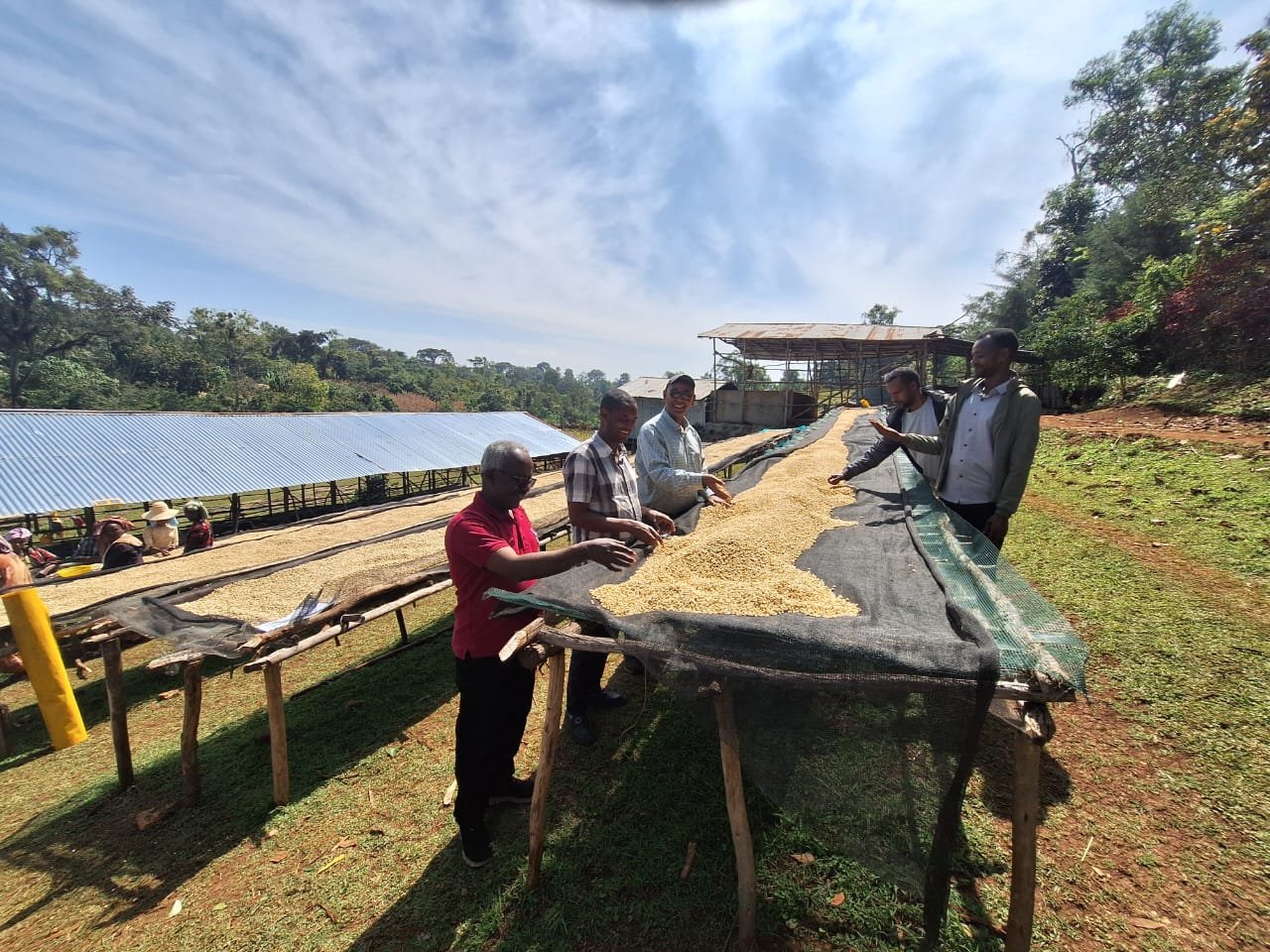
Coffee farmers sorting through coffee cherries. Courtesy of Millennium Water Alliance.
Making a difference in Ethiopia
Launched in September 2025, this project brings together powerful actors: Oromia Coffee Farmers’ Cooperative Union (OCFCU), participating cooperatives, Millennium Water Alliance (MWA), Trabocca, Taylors of Harrogate, Marks & Spencer and Project Waterfall.
Funding is provided through Marks & Spencer’s A Cup of Ambition programme, with additional investment from Trabocca and Taylors of Harrogate. The initiative has begun with a year-long feasibility study in two coffee cooperatives in the Oromia Union and Limu region of Ethiopia: Afata Wanja and Ilke Tunjo. Each cooperative utilises two washing stations, which serve hundreds of surrounding farmers.
Aspects of the study include:
Test water samples before and during the coffee processing stage for comparison of water content.
Assess schools and community water resources through survey to see where safe water could have the biggest impact.
Explore education opportunities in sanitation and hygiene, giving children and families healthier futures.
The goal is to design a solution that is not only safe and sustainable, but also cost-effective and scalable. By building practical models that work on the ground, the Oromia Coffee Project seeks to contribute to sustainable water stewardship for coffee communities across Ethiopia.
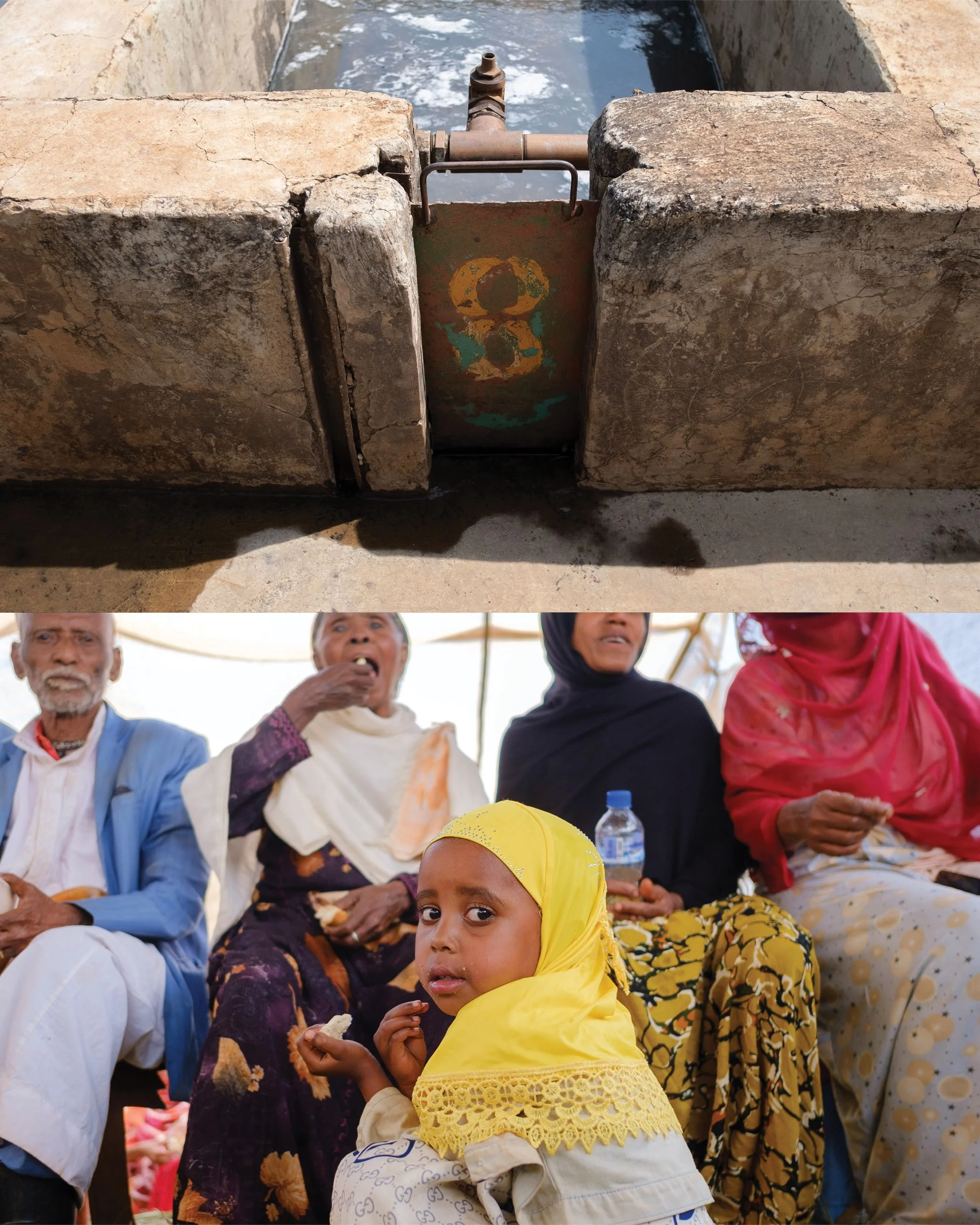
Top: Coffee Processing site branded with Trabocca logo;
Bottom: Young girl and community members taking a break in the shade. Courtesy of Trabocca. Courtesy of Trabocca
Trabocca’s visit to Afata Wanja Cooperative December 2025
As part of the assessment phase, Trabocca visited the Afata Wanja cooperative in western Ethiopia during field trips in December 2025.
The Trabocca team observed: “From the moment of arrival, the sense of community was clear. Prayers, fresh bread, local honey, and buna were shared together. The hospitality was warm and sincere. It reflected the pride, openness, and commitment of the people behind the cooperative. Spending time together made the project tangible. However, the visit left a bittersweet impression. The warmth and commitment of the community reflected a reality standing in contrast to the technical challenges and the availability of clean drinking water.”
Why it matters
This project is about more than water. It’s about people, livelihoods, and the future of coffee itself.
For the environment: cleaner rivers and protected ecosystems.
For farming families: reliable access to safe drinking water at home and in schools.
For children: better health and stronger opportunities for education.
For coffee: a sustainable system that ensures the industry thrives up and down the supply chain.
As Roxy Rocks-Engelman, Director of Project Waterfall, explains:
"Our goal is to tackle the critical issue of safe drinking water scarcity in a way that directly benefits the communities that are the lifeblood of the coffee industry. This project represents an exciting opportunity to integrate WASH directly into coffee production that can potentially benefit thousands of coffee growing communities whilst addressing the environmental challenges that water scarcity poses.”
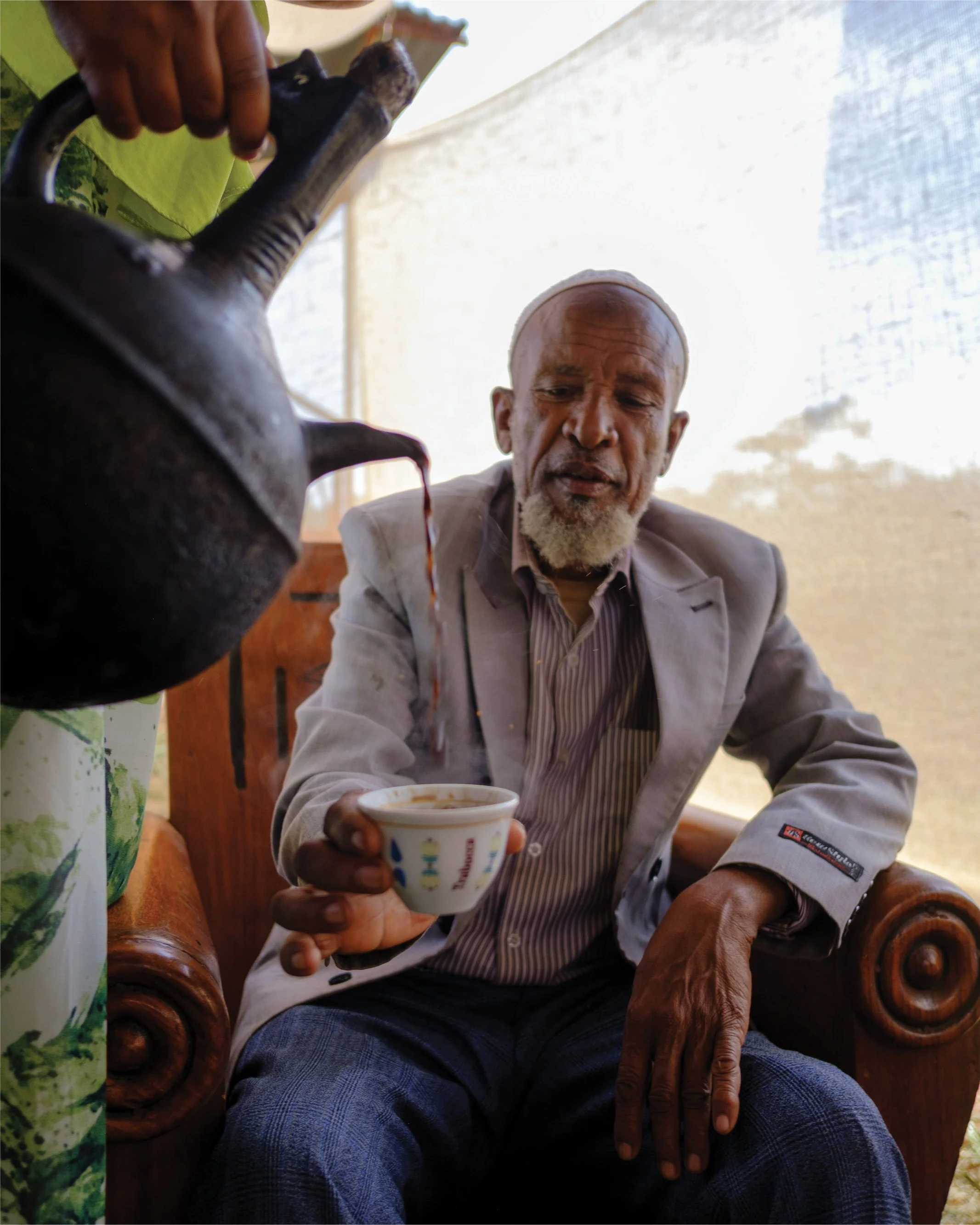
Man holds out his cup for a refill. Courtesy of Trabocca.
And Tamene Chaka, Country Director for the Millennium Water Alliance in Ethiopia, highlights the wider potential:
“This project is a powerful step in transforming a by-product of wet coffee processing into a sustainable solution, empowering communities and strengthening their livelihoods.”
Education is a two-way street
Complementary to physical resources, proper information is a crucial element to public health.
While coffee processing only occurs in certain seasons, access to safe drinking water and adequate sanitation are required year-round. Conducting community surveys during the assessment stage enables researches to accurately evaluate community needs and acceptance of proposed solutions. Ensuring systems are understood, supported, and locally manageable is critical for long-term success.
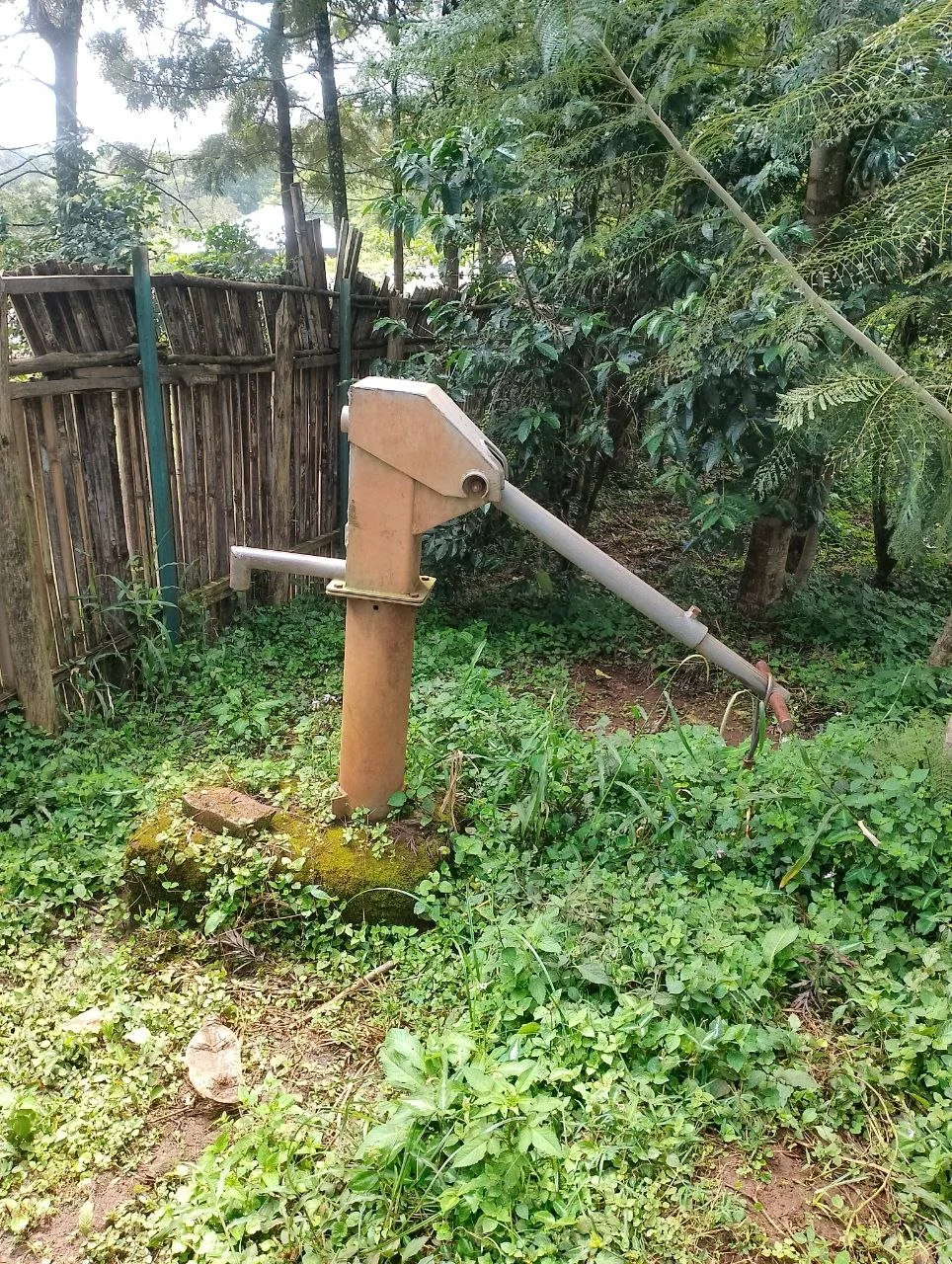
Water pump at Afata School. Courtesy of Millennium Water Alliance.
Looking ahead
This feasibility study is just the beginning. If successful, the findings could shape a blueprint for change, a model that other cooperatives across Ethiopia (and even other coffee-growing countries) can adopt.
The project findings have already revealed key challenges like inefficient infrastructure and remote conditions, along with several scenarios for improved post-harvest wastewater treatment.
As the team moves from the assessment of critical development areas to implementation, they will transform potential solutions into tangible resources for Ethiopian communities.
From the Source
For the Oromia Coffee Farmers’ Cooperative Union, which represents over 400 cooperatives, the opportunity is huge. As Dejene Dadi, General Manager of OCFCU in Ethiopia put it:
“Coffee is our backbone, and this initiative offers a path to protect our water sources and the health of our communities, while ensuring the long-term sustainability of our industry.”
Stay tuned as we follow this journey, we’ll continue to share our updates, from Ethiopia to your morning cup.