‘WATER IN COFFEE’ EVENT RECAP
Project Waterfall hosted its third Water in Coffee Panel Event on 17 March at Caravan Roastery.
The panel highlighted many insights, such as the urgency for the coffee industry to implement sustainable practices.
Kasper Hulsen, COO of Slow Forest Coffee, commented that sustainability is no longer a distant goal but an immediate necessity.
“If you want to do a 30 year investment in Brazil, you cannot finance it… the amount of drought you're going to see is going to be so massive that your investments will be gone.”
Younger generations are concerned about their future in terms of the exponential rise of climate change. This anxiety is spiking consumer demand for sustainably-sourced coffee products. Suppliers are attempting to meet this demand, not only to stay relevant in the market, but also because of the utter necessity to sustain natural resources.
“The question won’t be ‘what kind of beans should we get next year?’. It will be ‘Can we get beans next year?’. And ‘Can I actually have a coffee business in three years?’” .
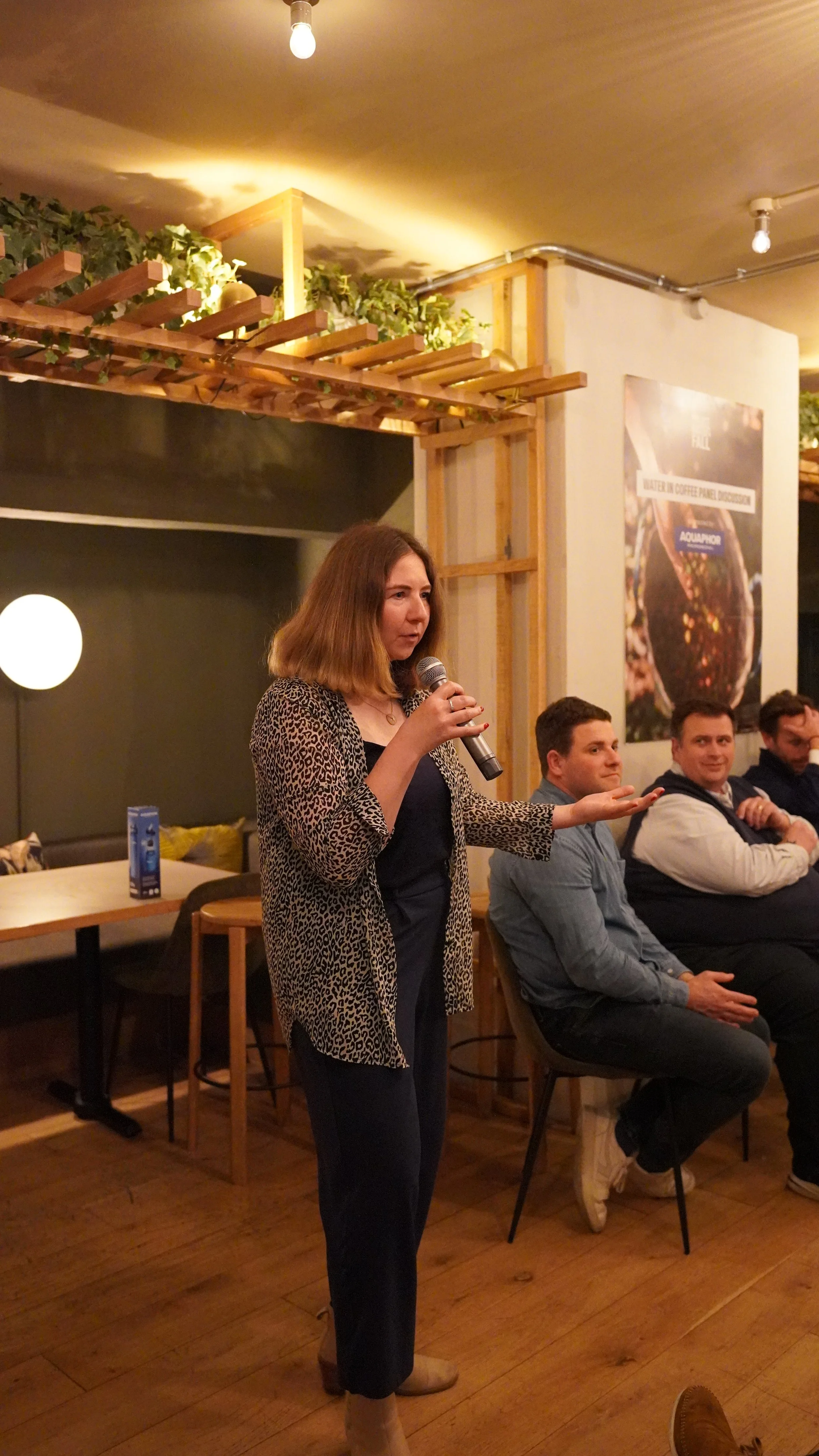
Roxy Rocks-Engelman, Director of Project Waterfall, introducing the event.
WATER IN COFFEE
To kick off the evening, Project Waterfall Director, Roxy Rocks-Engelman, explained the significance of water in the coffee supply chain, as well as Project Waterfall’s dedication to safe drinking water accessibility through multiple WASH projects conducted alongside delivery partners, like WaterAid and SPLASH.
Roxy Rocks-Engelman emphasised the progress made with Project Waterfall’s “From Wastewater to Safe Water” project in Ethiopia. Its funding is provided through Marks & Spencer’s A Cup of Ambition programme, with additional investment from Trabocca and Taylors of Harrogate. This project in partnership with MWA and OCFCU is exploring how to reuse wastewater from coffee washing stations and also how to filter wastewater into safe drinking water.
According to a World Economic Report in 2019, “It takes 140 litres of water to produce one cup of coffee,” said Roxy Rocks-Engelman. Whilst 1 in 10 people around the world lack access to clean drinking water in proximity to their home.
This pressing issue provides all the more reason to bring together coffee professionals to initiate dialogues on these topics.
“It seemed there wasn’t a dedicated space to talk about water in coffee,” Roxy Rocks-Engelman said, “so we created these events.”
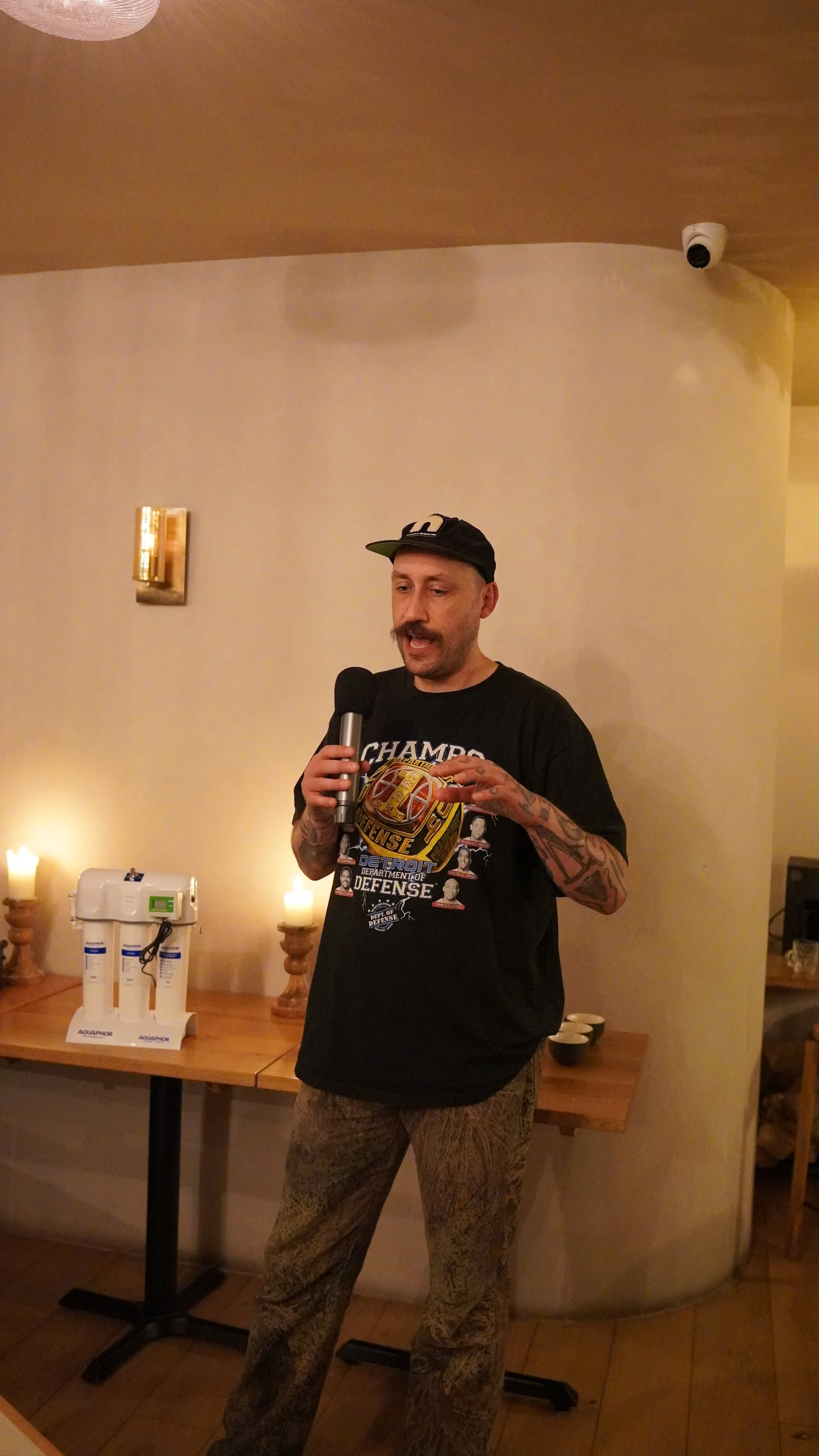
Jamie Strachan, Head of Coffee at Caravan Roastery, commenting on the cupping event.
SUSTAINABILITY INNOVATIONS IN SPECIALITY COFFEE AND OAT MILK
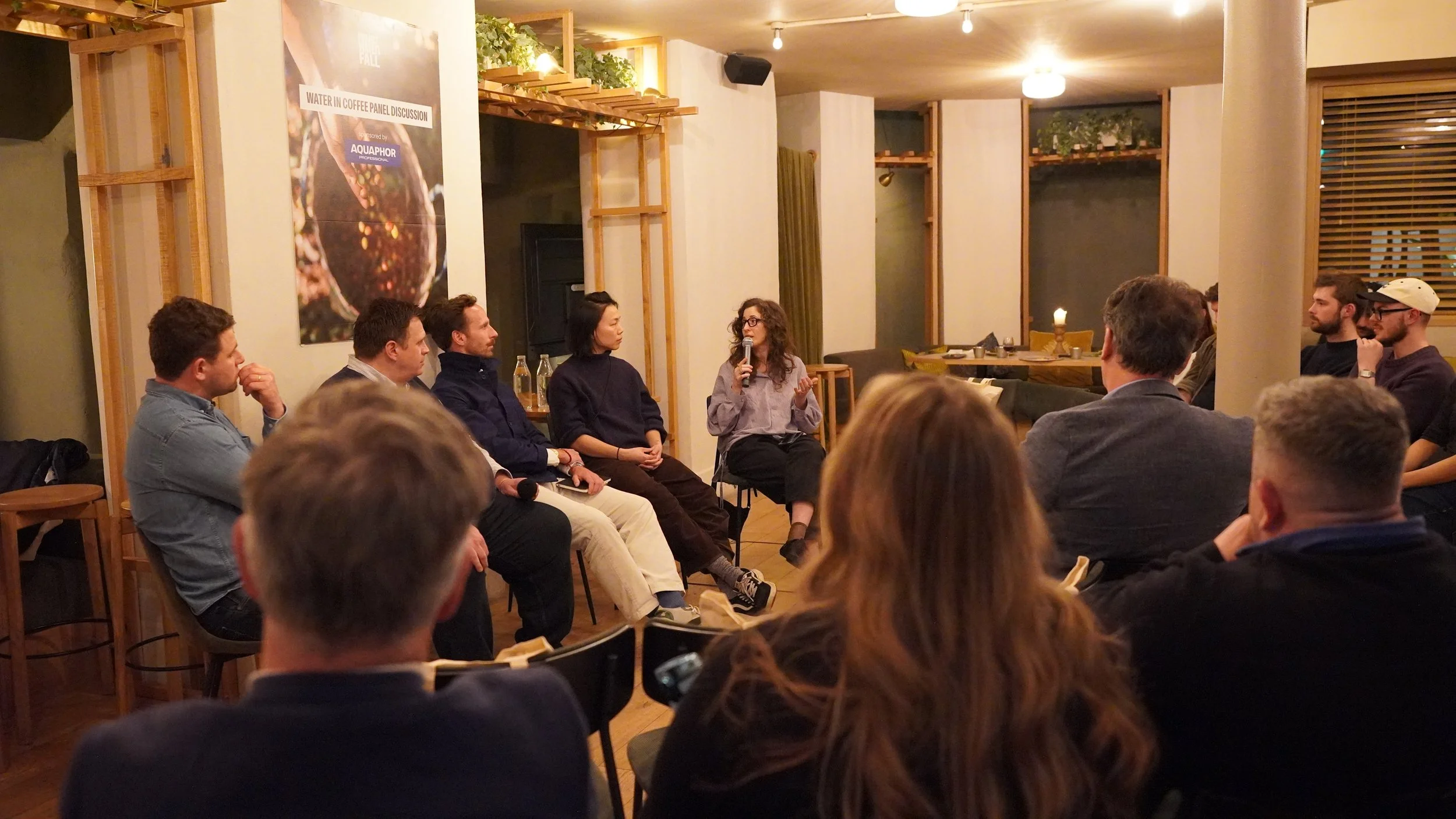
Jessica Worden, Head of Coffee at GAIL’s, moderated an informative panel and Q&A session including insights from Freda Yuan from Origin, Greg Amann from Minor Figures, Kasper Hulsen from Slow Forest, and Tom Greensmith from CRU Kafe.
Freda Yuan is the Head of Coffee at Origin Coffee Roasters. Origin Coffee Roasters shifted toward regenerative agriculture, focusing on non-invasive, soil-positive farming that improves ecosystem health and water retention. She emphasised biodiversity, soil health, and holistic farm systems as the key to long-term sustainability. Origin also utilises low-carbon logistics innovations, particularly the use of sail-powered shipping, with their partner Belco, which reduces fuel use, preserves coffee quality through stable storage conditions and significantly lower emissions in transport.
Greg Amann is the Head of On Trade at Minor Figures. Minor Figures innovations centre on reducing environmental impact through product design and logistics. A key development is oat milk in powdered (concentrated) form, which removes water before shipping. This dramatically increases volume efficiency and reduces transport emissions. This approach tackles both water use and supply chain efficiency, showing how reformulating products can deliver large-scale sustainability gains.
Kasper Hulsen is the Chief Commercial Officer at Slow Forest. Slow Forest’s model of agroforestry-grown coffee, where coffee is cultivated within diverse, multi-layered forest ecosystems. This approach restores degraded land, improves soil structure, and increases water retention through complex root systems and biodiversity. Slow functions on a fully integrated supply chain, from land restoration to distribution, which enables full traceability and environmental accountability. Their work combines ecological restoration with scalable coffee production, demonstrating a systemic approach to sustainability.
Tom Greensmith is a founding partner and Head of Coffee at CRU Kafe. CRU Kafe is committed to ethical sourcing through Fair Trade and certified organic coffee, maintaining a focus on quality alongside environmental standards. CRU has been an active and historical supporter of Project Waterfall, funding Tibeb school in Ethiopia.
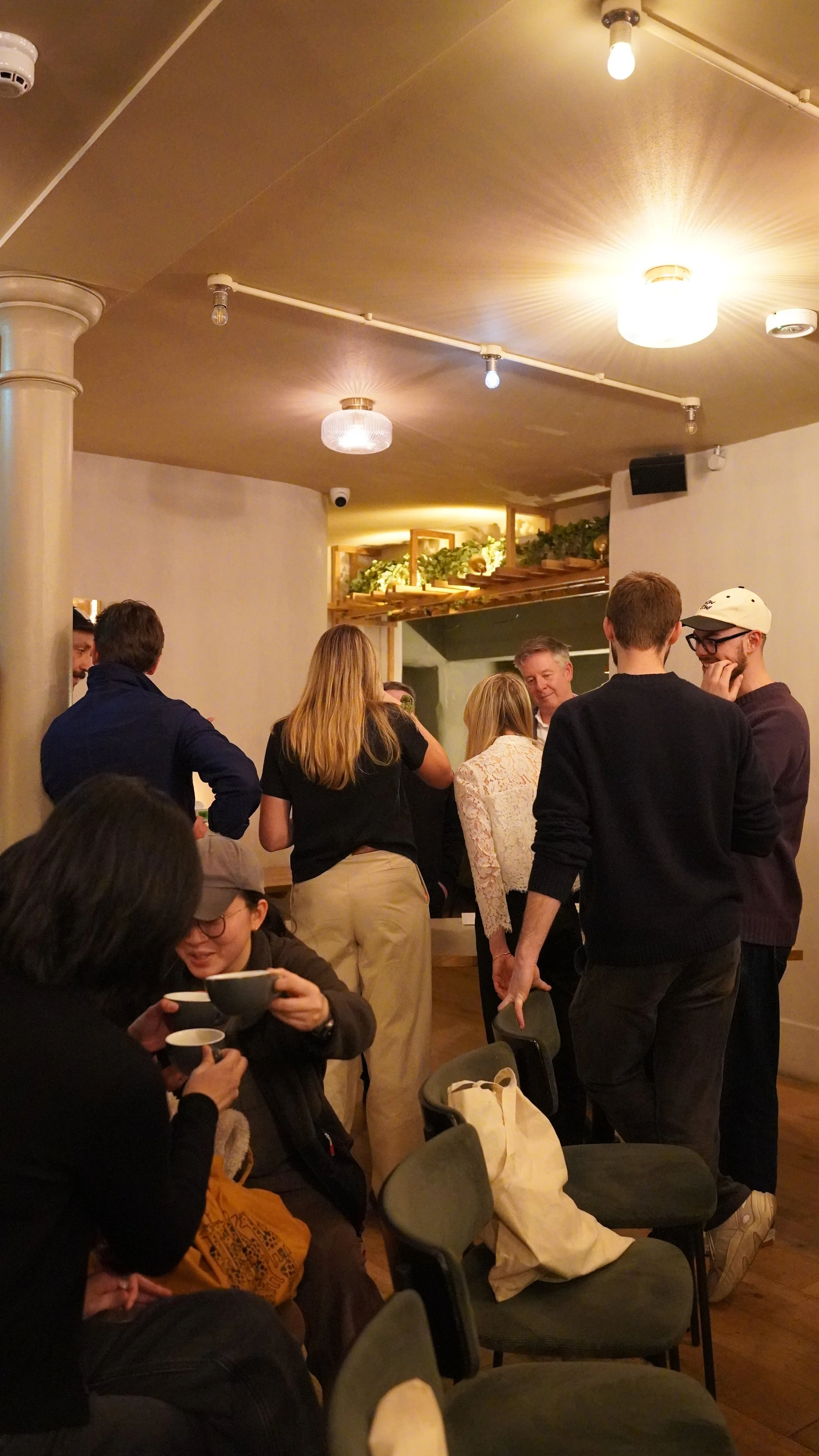
Guests testing coffees and mingling.
MOVING FORWARD
We are proud of the coffee industry’s commitment to advancing sustainable sourcing practices, alongside its deep curiosity and technical dedication to the craft of brewing an exceptional cup of coffee.
Thanks to our event sponsor, AQUAPHOR Professional UK, and Caravan Roastery for creating such a meaningful space to discuss and celebrate water in coffee. Our moderator, panellists and guests are the fuel behind these events, so thank you to those who could join us this time around.
Project Waterfall will host at least one more Water in Coffee panel this year. If you are a coffee professional or are passionate about water accessibility, please contact us at hello@projectwaterfall.org
Stay tuned for more updates on our events and projects!
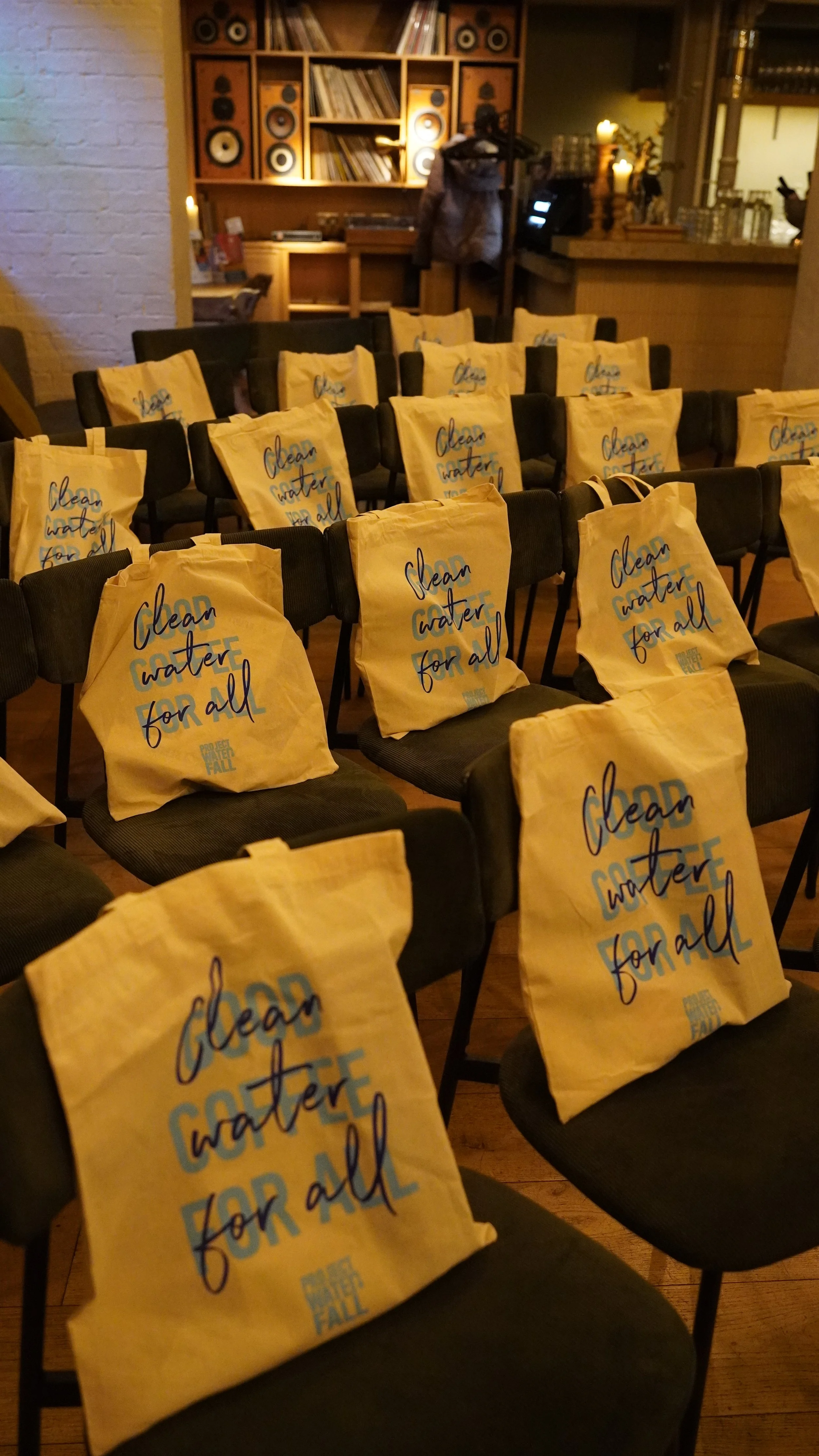
Project Waterfall tote bags supplied to guests.
Visit the ‘Water in Coffee Education Series’ page on our website to learn more about these events!