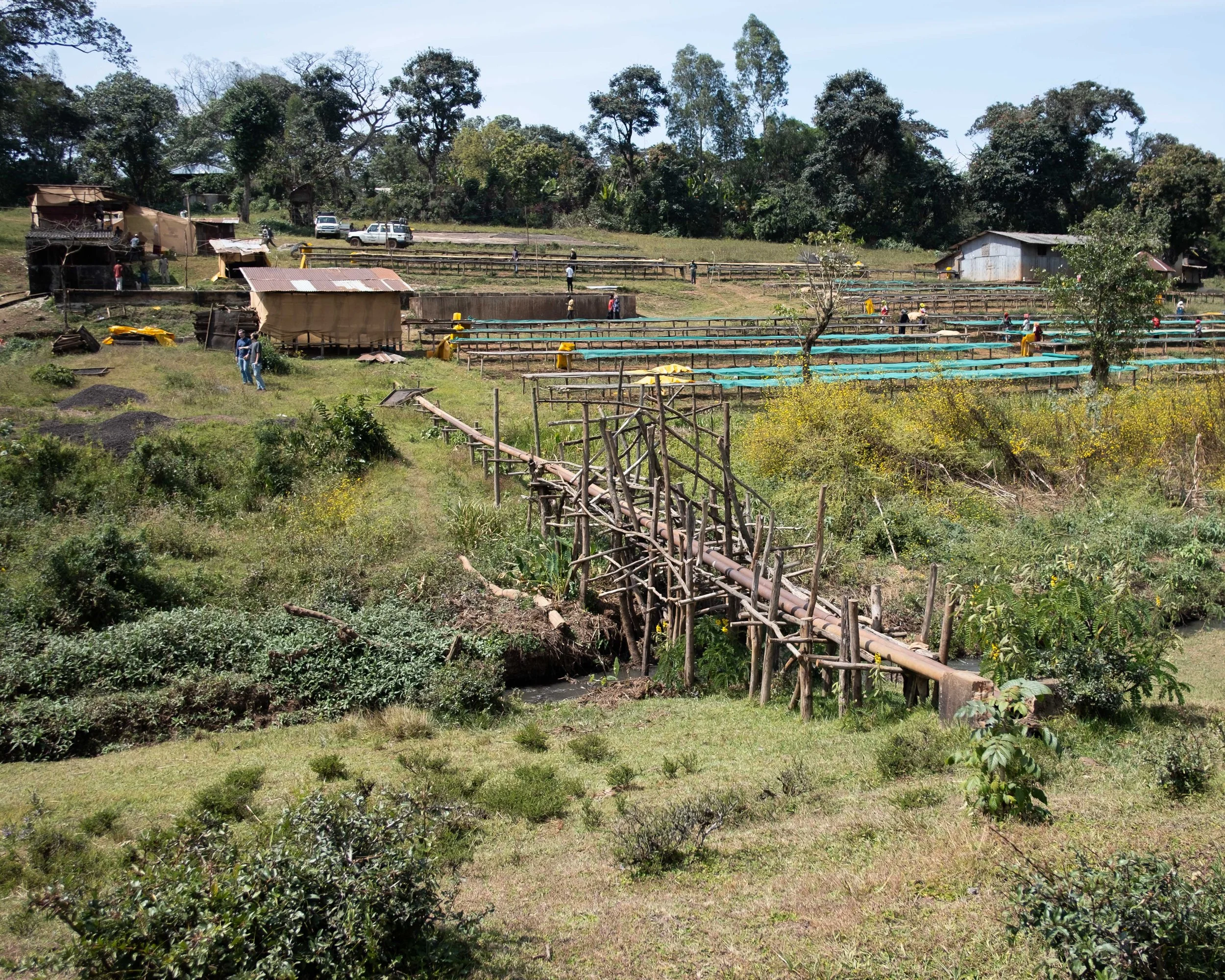
A rare example of cross supply chain collaboration is seeking to improve water use and wastewater management at coffee washing stations, while increasing access to safe and clean water for communities in Ethiopia’s Limu region.
Every cup of coffee tells a story about the estimated 140 litres of water used to produce it from crop to café. From crop irrigation, to processing and the drinking water consumed by farm workers, much of that story focuses on coffee-growing communities In Ethiopia’s Limu coffee-growing region, the relationship between water and coffee has become the focus of an ambitious new multi-stakeholder initiative that is redefining what responsible sourcing can look like in practice.
The Oromia Coffee Project brings together a broad coalition of partners from across the coffee supply chain: Oromia Coffee Farmers’ Cooperative Union (OCFCU), participating cooperatives, green coffee importer Trabocca, roaster Taylors of Harrogate, retailer Marks & Spencer, international WASH specialists Millennium Water Alliance (MWA), and Project Waterfall, the charity that funds safe drinking water, hygiene and sanitation in coffee-producing communities. Funding is provided through Marks & Spencer’s A Cup of Ambition programme, with additional investment from Trabocca and Taylors of Harrogate.
The project’s goal is clear: to improve water use and wastewater management at coffee washing stations, while increasing access to safe and clean water for surrounding communities. For Roxy Rocks-Engelman, Interim Director of Project Waterfall, the power of collective action from across the coffee value chain has been one of the most rewarding aspects of the project so far.
“What made this project unusual from the start was the composition of the group around the table: a producer cooperative, a green coffee importer, a roaster, a retailer. Every point in the value chain is represented – that is genuinely rare,” she says.
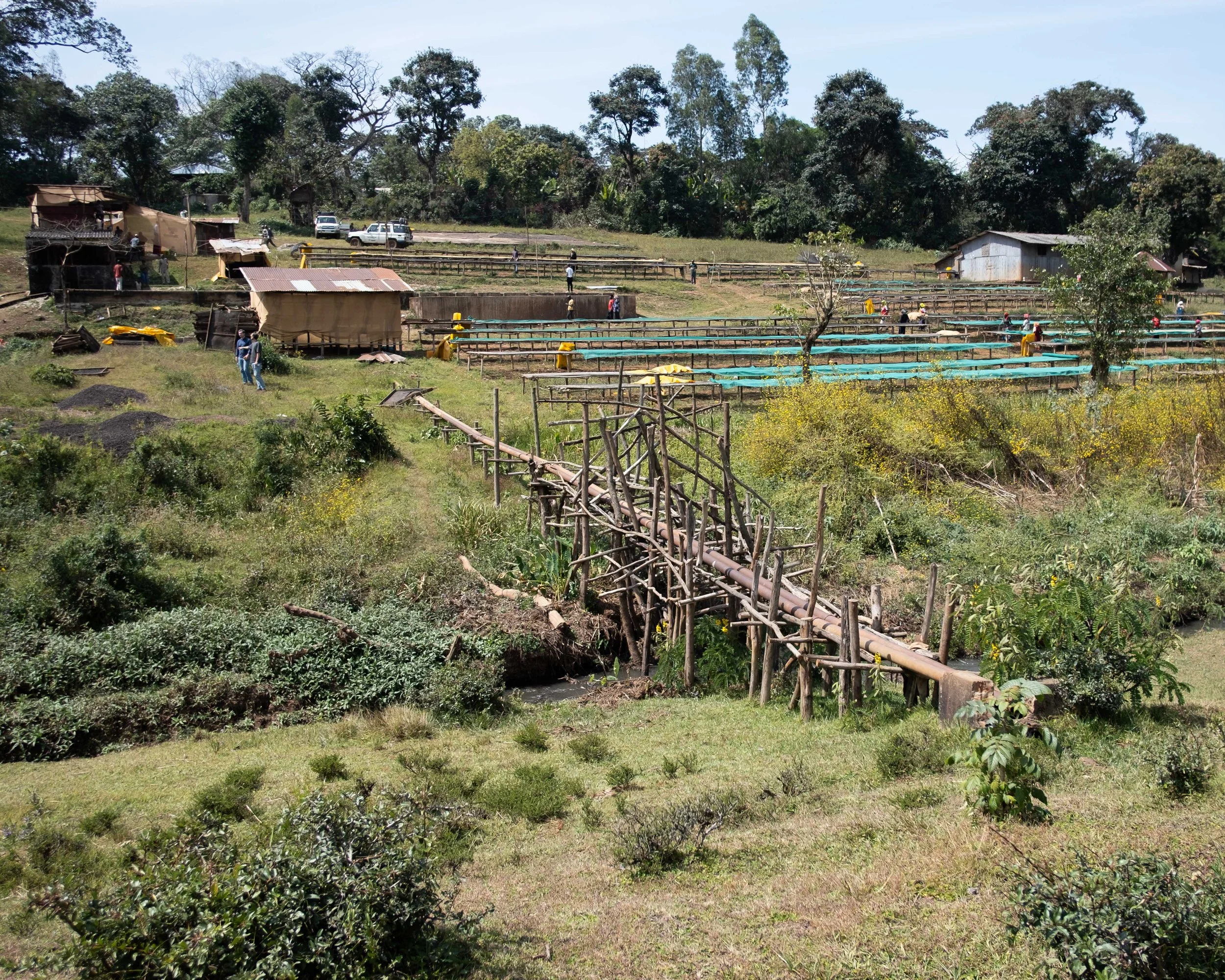
1) View on the Afeta Wanja Washing Station with the river passing by (Photo credits: Maurica Kilian for Trabocca)
WHY WATER MATTERS HERE
Washed coffee processing in Ethiopia and other coffee-growing countries is highly water intensive, and many of these areas are increasingly prone to water scarcity and insecurity. Producing a single kilogram of green coffee can require around 20 litres of water or more (Applied Water Science, 2019).
Processing technology is the biggest factor behind water use and wastewater volume. At Afata Wanja cooperative, one of the two sites assessed during Phase 1 of the Oromia Coffee Project, the Aagard Mill used approximately 23 litres per kilogram of coffee produced. Over a typical three-month processing season, that equates to around 4.25 million litres of wastewater generated at that site alone.
The second project site, the Penagos Mill at Ilke Tunjo, however, uses approximately six times less freshwater per kilogram of coffee than the Aagard Mill. Coffee washing stations are also prone to ineffective treatment processes. Untreated coffee processing wastewater carries high organic loads, nitrates, phosphorus, and suspended solids. It is often acidic, slow to break down naturally and is stronger than most municipal or industrial effluent.
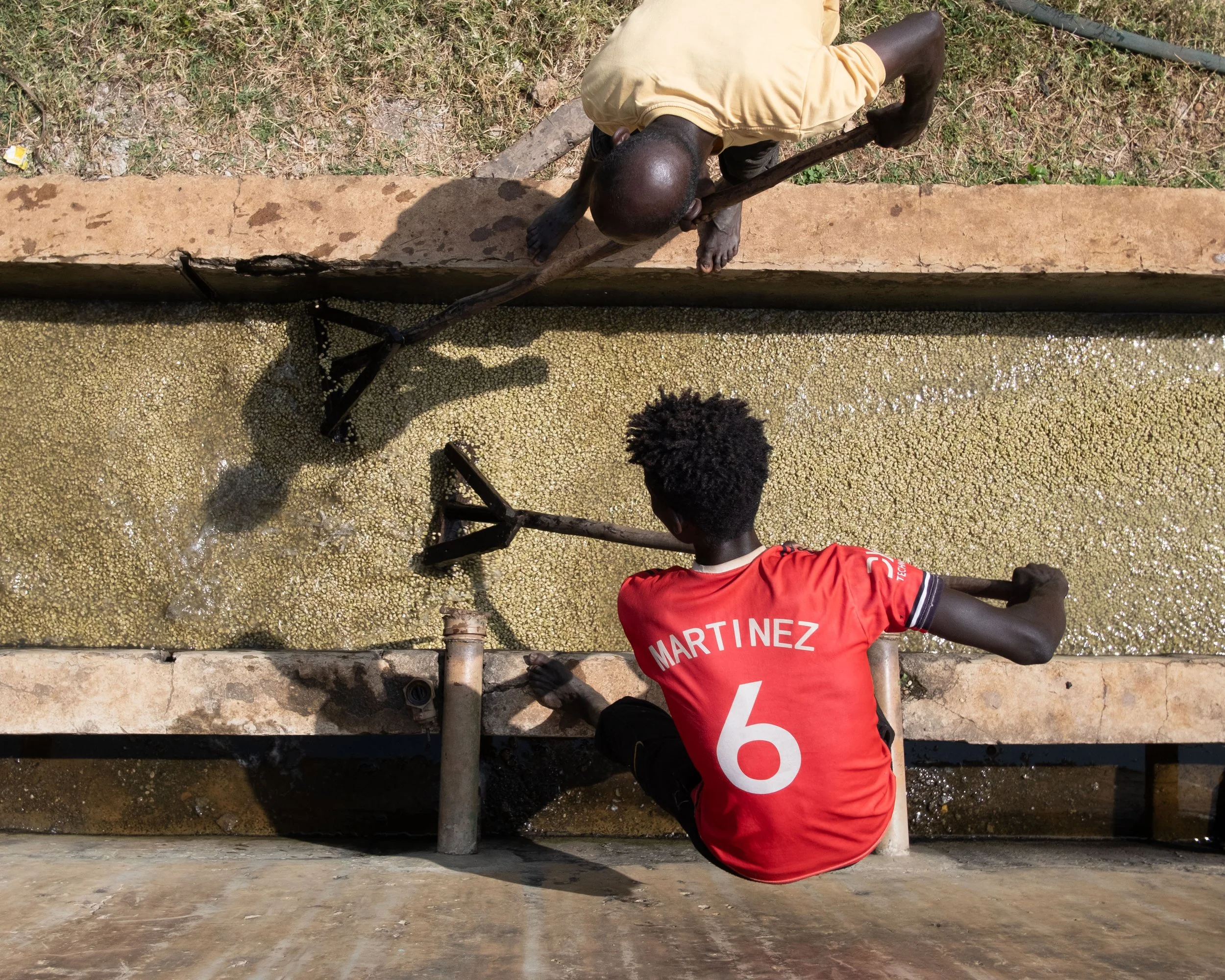
2) Washed Coffee Processing at Afeta Wanja Cooperative (Photo credits: Maurica Kilian for Trabocca)
Millennium Water Alliance’s study shows that when untreated wastewater is discharged into untreated into local rivers, it degrades water quality, disrupts aquatic ecosystems through eutrophication, and directly threatens the communities that depend on those same water sources for drinking, cooking, washing and livestock.
MWA’s methodology for both processing sites rests on three principles: reduce, with a treatment plan that cuts pollutant loads; re-use by storing treated water instead of discharging into rivers or soaking into the ground; and recycle, by promoting a circular economy around coffee byproducts. Rivers in rural coffee landscapes are shared spaces and they are the living veins of entire communities. Protecting them not only makes sense to protect livelihoods, it is a matter of survival for hundreds of communities. Crucially, MWA’s proposed treatment system is expected to reduce organic pollution by 97%.
WHAT THE EVIDENCE SHOWS
Phase 1 of the Oromia Coffee Project centred on rigorous, on-the-ground assessment. Led by Millennium Water Alliance, the research team gathered evidence through 376 household surveys, nine focus group discussions, three school-level WASH (water, sanitation, and hygiene) assessments, and direct laboratory testing of effluent and drinking water at the Ilke Tunjo and Afata Wanja washing stations.
The findings were sobering. Laboratory testing confirmed that single-cell earthen lagoons at both sites leave effluent Biochemical Oxygen Demand (BOD5) at five to six times the Ethiopian discharge standard. Total suspended solids, nitrogen, and phosphorus were higher leaving the lagoons than entering them, suggesting the lagoons are generating biomass rather than providing treatment. Every school and community drinking water 2 source sampled tested positive for E. coli and total coliforms.
“During harvest season, the rivers can turn black,” says Dejene Dadi, General Manager of the OCFCU, which today includes 407 cooperatives with more than 562,000 farmers. “They can smell and livestock share community drinking water with no protection,” he adds.
Seventy-five percent of households surveyed in Phase 1 of the project named drinking water safety as their primary concern, with women’s focus groups offering vivid testimony to the seasonal deterioration they witness year after year.
“EVERY POINT IN THE VALUE CHAIN IS REPRESENTED – THAT IS GENUINELY RARE” Roxy Rocks-Engelman, Interim Director, Project Waterfall
Across both sites, women and girls account for nearly 80% of water collection, making an average of around three trips per day for a total of approximately 11 litres per person, which is less than half the Ethiopian rural standard. Two-thirds of women surveyed said the time burden costs girls their education. In schools, the situation is no less urgent: two of the three primary schools assessed had no water on site at all, and cubicle-to pupil ratios at Ilke Tunjo reached 1:269 for girls, against a national standard of 1:50.
Yet within these challenges lies compelling evidence that communities are overwhelmingly seeking solutions to improve the situation. Ninety-three percent of households said they would pay for an improved water service, and 89% said they would specifically support a community maintenance fund. “For our farmers, coffee is our backbone,” says Dejene Dadi. “This initiative protects water sources, community health, and the sustainability of our industry.”
THE ROAD AHEAD
Phase 1 was the research and proof of concept stage of the Oromia Coffee Project. Phase 2, now in development, is designed to act on those findings across four objectives: enhancing climate and environmental resilience through improved wastewater management; strengthening community resilience through safer water services; advancing gender equality through school WASH and menstrual health support; and building a practical water stewardship model that the wider coffee supply chain can learn from and replicate.
“Even at the scale of two cooperatives, we are looking at impact for 17,000 people,” says Rocks Engelman. “If we can develop a model that works, and scale it with OCFCU and broader supply chain support, we have something we can share with the whole industry.”
Read the full article and discover more coffee news here: 5th Wave.